
M-a întrebat cineva drag dacă este corect să ne rugăm Duhului Sfânt, formula biblică fiind: ,,Ne rugăm Tatălui, în Numele Fiului, prin Duhul Sfânt“.
Când mi s-a mai pus altă dată această întrebare, am răspuns:
,,Te poți ruga oricărei persoane din Sfânta Trinitate! Cei trei una sunt! Să nu-ți închipui că poți vreodată să te rogi Fiului fără să te rogi și Duhului sau că te poți ruga Tatălui fără să afle și Fiul. Nu lăsa fantezia ta să-și facă idoli și nu visa la o scenă în care tu te rogi, iar de la celălalt capăt al firului ridică receptorul Duhul Sfânt, dar el zice repede: ,,Vai, nu este pentru mine, este pentru Tine, Doamne“. Dumnezeu este Unul singur, chiar dacă într-o întreită ființă“.
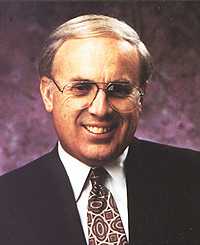
M-am bucurat să găsesc confirmarea părerilor mele într-un studiu al lui John MacArthur, renumitul învățător de Biblie din America. Încep printr-un citat și apoi vă las bucuria să parcurgeți tot studiul în care John vorbește candid și practic despre dialogurile noastre cu Dumnezeu.
Știam că lui Ezechiel i s-a poruncit să vorbească Duhului în celebra viziune a văii oaselor:
,,El mi-a zis: „Proroceşte şi vorbeşte duhului! Proroceşte, fiul omului, şi zi duhului: ‘Aşa vorbeşte Domnul, Dumnezeu: «Duhule, vino din cele patru vânturi, suflă peste morţii aceştia, ca să învieze!»’ ” (Ezechiel 37:9 ) și mai știam și că există un foarte intersant verset în Efeseni 6:18:
,,Faceţi în toată vremea, prin Duhul, tot felul de rugăciuni şi cereri. Vegheaţi la aceasta cu toată stăruinţa şi rugăciune pentru toţi sfinţii“ (n.a. – nu la toți sfinții!).
M-am bucurat însă să găsesc această foarte frumoasă prezentare a lui John.
+++
Incidentally, you can pray to anybody in the Trinity you want. Pray to God. People say, “Oh but you have to pray in the name of the Lord Jesus.” Well we’ll talk about what that means. You can pray to God. You can pray to Christ. You can talk to the Holy Spirit. And just talk to anybody in the Trinity, or you can say, “I want all of You to listen here, I have something to say to all of You.” So you can call them all in there.
Vreau să vă spun cu această ocazie că vă puteți ruga oricărei persoane vreți din Trinitate. Rugați-vă lui Dumnezeu. Oamenii spun: ,,Vai, dar noi trebuie să ne rugăm în numele Domnului Isus!“ Vom discuta și despre aceasta azi. Tu roagă-te lui Dumnezeu. Roagă-te Domnului Isus. Stai de vorbă cu Duhul Sfânt. Pur și simplu, roagă-te oricărei persoane din Trinitate. Poți chiar să spui: ,,Vă rog pe toți trei să mă ascultați. Am ceva de spus și vreau să mă ascultați împreună cu toată atenția.“ Poți să ceri ca toți trei să te asculte.“
+++
 We’re going to talk about how to pray right now.
One of the very basic things about the Christian life is praying. You know, we said that reading the Bible is like eating. Well praying is like breathing. One of the other things that it’s really helpful to do if you happen to be alive is breathe. It has very redeeming value.
You exist when you come into the world in an atmosphere. And one of the things that the atmosphere does is put pressure on your lungs. And from the very beginning you breathe. And the reason you breathe is because of the air pressure that is exerted against your lungs, it forces your lungs to take air in. That’s why it’s much more difficult to hold your breath than it is to breathe. You hold your breath for about a minute and you turn purple and your heart starts pounding and you get sweaty because you’re resisting the normal pressure against your lung.
Well, prayer is like that. When you’re born into the family of God, when you’re born again, when you become a child of God and you enter into God’s world, there is a sphere in which you live. The atmosphere of God’s presence and grace exerts pressure on your life. And the normal thing is to breathe, and we just say that’s prayer responding to God’s pressure and presence in your life.
I. Prayer is as normal to the Christian as breathing is to the human.
You live in an atmosphere and you respond to that atmosphere of the presence of God by receiving that presence of God and by taking it in and putting it back out again in response to Him.
Prayer really is important. We talk a lot about prayer and we throw the word around, but prayer is a tremendous power. Somebody once said, “Prayer is the slender nerve that moves the muscles of omnipotence.” And prayer activates the power of God. That’s putting the same thing in a simple term. Prayer activates the power of God. God moves in response to the prayers of His people. And not only that, but prayer lines you up properly with God. When we’re told to pray, we are told to pray in the Spirit.
Now what it means to pray in the Spirit is to pray consistently with the Spirit of God. So prayer not only moves God to act but prayer is to align us with the will and purpose of God.
When we pray in the will of God or in accord with God’s will we are lining up with His purposes. And so prayer has a definite effect of lining us up with God’s purposes, as well as causing God to act. Prayer really does change things. I know when I was a little kid we had a deal in our dining room that said, “Prayer changes things.” It really does. Prayer is effective.
There was a guy who was doing some sculpture one time and he was down pounding on the bottom of this thing on the ground. And a preacher came in and said, “I wish I could deal such changing blows on the hearts of men.” And the sculptor looked at him and said, “Maybe you could if you worked like me, on your knees.” And there’s a lot of truth to that because prayer can do what all of your teaching can’t do.
If my experience has taught me anything, and I say this with a very genuine feeling, that what I say you probably won’t really understand totally. But from my standpoint in the ministry, I know the difference in my ministry when there is prayer and when there is not. It is very evident to me. Both the prayers of people, even people I don’t know, and my own faithfulness in prayer makes a very distinguishable difference in my ministry. And I am very aware of it. Prayer is very effective.
II. We would say that prayer simply is talking to God.
You know, and one of the things that happens when a baby comes into a family is that the first thing you want the baby to do is what? The first thing that you want out of new life is communication. You want some response. And that’s the same as a Christian. The thing that happens when you become a Christian is immediately you’re thrown into an environment with God where you have a tremendous desire to communicate with God, to respond and say the things that are on your heart.
Now, that’s all prayer is. Prayer is not buying a little book and saying, “Now I lay me down to sleep,” bleep, bleep and all that. That isn’t prayer. Prayer is communing with God. It’s just conversation like you talk to anybody. It isn’t a whole lot of thees and thous and holy mogus and all kinds of fancy words. It’s not a vocabulary contest to see who can say the most theological words without taking a breath. It isn’t that at all.
And prayer is not vain repetition. It’s not, “Please, oh do this, oh I beg You, I beg You, I beg You. You know, please do this, please.” You don’t need to beg like that. The Pharisees had endless repetition. Prayer isn’t that either. It’s not saying 48 Hail Marys in a row, the same thing over and over again. God isn’t deaf, and He heard you the first time. There isn’t any need; there isn’t any need for endless repetition. That’s Matthew chapter 6. Prayer is not endless repetition.
Prayer is not begging, begging, “Oh please, Oh please, Oh please do this and if You only do this and not only this…” It’s not that kind of thing, although there is petition and there is earnestness in it. Prayer is simply conversation. And sometimes in your life you may say, “God, it’s sure a nice day and I hope You’re enjoying it like I am, and I just want to thank You for it.” That’s a significant a prayer as if you stood up in a pulpit and said a bunch of theology because all you’re doing is communing with God.
When we read the Bible, God talks to us. When we pray, we talk to Him. And you’ve got to have both sides or you don’t have conversation. Nobody likes a one-sided conversation. Now all Christians pray. We all talk to God sometimes. We don’t all pray right; we don’t all pray the way we ought to. A lot of Christians pray wrong. In the first place, we spend a lot of time asking for stuff we don’t need. Did you ever know that? “Lord, give me this, give me that, give me that,” and the Lord knows if He gave it to us it would only mess us up, so He doesn’t.
And other things we do, we ask for things we already have. Did you ever ask the Lord for peace? The Bible says you have the peace that passes understanding already. You ever ask the Lord for grace? The Bible says His grace is already sufficient. You ever ask Him for love? He says the love of God is shed abroad in your heart. What more do you want? You see, we ask the Lord for a lot of stuff we already have. That’s why James says we ought to ask for wisdom. Then if we have wisdom that will be the sense not to ask Him for what we’ve already got.
So prayer is simply communing with God. But there are some rights and some wrongs and some things about prayer that we need to understand basically. Prayer is simply talking to God. It isn’t to be sophisticated. It isn’t to be formal or informal. It’s just anything. Paul says in Ephesians 6:18, “Praying always with all kinds of prayer.” Any kind of prayer. You could be crying out, “Oh God,” you know, in a terrible time of stress. Or you could be saying, “Lord, this is a terrific day. I’m really happy. I just want You to know I’m checking in.” You know, that’s prayer. Any kind of communion with God at any point, at any level, on any subject. Communion with God is prayer.
Now, you don’t have to close your eyes. Of course, I grew up in a church that was rather provincial and whenever you prayed, you know, you sort of did this little routine. You closed your eyes and bow your head and all that kind of stuff. And it’s important to teach kids to do that so they don’t look around a room and make little noises and fool around, sneak, you know, their dinner, and stuff. So you get them to, you know, do this, just so nobody starts before you, see. Or else we hold hands, you know, just to get them to concentrate.
I remember when I used to go out with this bunch of guys and we used to go on the road. And we’d would go to preach and sing, and we had a quartet and a lot of funny deals we did. So we’d go out, and every time we would go out we would have a prayer meeting, you know. And the first time I went out we went out and everybody prayed with their eyes open, especially the guy who was driving, you know.
It was his turn to pray and he just…I mean, we were glad for that, we were, you know. We didn’t want to just have him close his eyes and commit everything to the Lord. He couldn’t drive well with his eyes open. But anyway, he’d drive along. And, you know, the first time it happened I thought, “I wonder if the Lord hears. I mean, he doesn’t have his eyes closed.” And then every time you see somebody pray on television they’ve always got their eyes wide open.
And it really doesn’t matter, you know. The Bible says you can pray with your eyes lifted up to heaven. It says you can pray with your hands lifted up. It says you can pray kneeling, you can pray bowing, you can lie down and pray. You can stand up, you can pray while you’re walking, sitting. You know, it doesn’t matter. I know some people who have their devotions in the bathroom, you know, and that’s fine. It doesn’t matter really.
Praying is just conversing with God. And the particular physical position, the particular mode, what you do with your eyeballs, it isn’t the issue. That’s not the issue at all. The idea is communing with God.
Now, let me just talk about prayer very briefly from a standpoint of a couple of points you have in your outline.
The necessity, the conditions, the content and the hindrances. We’re going to run by them quick.
A. First of all, the necessity for prayer.
a. It is necessary, number one, because it is commanded. And anything that is commanded of the Christian becomes necessary. Jesus said in Luke 18:1, “I want everybody everywhere to pray and not to faint.” You know what most people do when they have a problem? Faint. Jesus said, “Don’t faint, – “ do what? “ – pray.” I want you to pray, not faint.
You know, Peter had a problem. He was always falling asleep in prayer meeting, and Jesus, said to him, “You know, if you stayed awake and prayed you wouldn’t be in the mess you’re in. Watch and pray unless you enter into – “ what? “ – temptation.” You see, Peter didn’t pray so he didn’t have himself girded really for the temptation. If you pray more than you’d sleep, you be better off. You know, some of us go to bed at night and we say, “Dear Lord…” and we’re gone, you know. We wake up the next day and we bomb out all day. Well you know what we did? We went to sleep instead of praying. Watch and pray lest you enter into temptation.
Prayer undergirds us. It’s necessary to pray. It’s necessary because it’s commanded. It’s necessary. And you can add this in a little point, sub-point there; it’s necessary because it keeps sin away. It prepares us. Incidentally, you can pray to anybody in the trinity you want. Pray to God. People say, “Oh but you have to pray in the name of the Lord Jesus.” Well we’ll talk about what that means. You can pray to God. You can pray to Christ. You can talk to the Holy Spirit. And just talk to anybody in the trinity, or you can say, “I want all of You to listen here, I have something to say to all of You.” So you can call them all in there.
Now it is commanded that we not only pray but it is commanded that we pray a lot. In fact, it says, “Praying always,” in Ephesians 6:18. And in 1 Thessalonians 5 it says, “Pray without – “ what? “ – “ceasing.” Now, you know, I used to wonder, pray without ceasing, how do you do that? Because as a child all I could see was your eyes closed and your hands…you could go around the world like this, and you’d be like the bruised and bleeding Pharisees, you know. They were a group of Pharisees of the time of Jesus who thought it was a sin to look at a woman, so whenever a woman appeared they immediately closed their eyes and they kept running into walls. And that’s how they got their name, see.
But we don’t want you to be bruised and bleeding Christians going around praying and running into everything. So that isn’t the idea of praying always, or praying without ceasing. It simply means that you are in an attitude of God consciousness at all times. It is commanded that you…you see everything in relation to God. Let me give you an illustration of how that works. You’re going through life and you’re just minding your own business. You see something good.
You see a clear day, you see a lovely little child or you hear a friend, they call you on the phone and you think about the love of that friend. Or maybe you look at the person you love and you just say, “Isn’t that great,” so what do you do? What’s your first reaction? Thank You, Lord, for that. You’re seeing things in relation to God, you see. You don’t just say, “Isn’t that a nice thing.” You say, “God, You made that and You made it that way and I thank You for that.” You see everything in relation to God and you converse with Him about it.
You see something bad, you don’t say, “There’s something bad, it’s too bad bad things are around. You say, “No, God, there’s something that’s bad. I want You to make it good, Father. Can You do something about the situation?” So you see a bad thing in relation to God. Or maybe you see a problem and you say, “Lord, here’s a problem. Deliver us from the problem, solve the problem, gain glory from the problem.” You see, in other words, everything it is, good, bad, indifferent; whatever it is, you see it in the light of God. It becomes something for which you can talk to God. That’s praying without ceasing.
It isn’t just mumbling all through the day some little words or praying some special prayer. It’s just relating everything that goes on in your life through the day to the presence of God, He’s there. You can all think of a best friend you have. Maybe it’s your husband or wife or boyfriend or girlfriend, or whatever. But think of the best friend. And imagine your best friend was with you today, all day by your side. You had the whole day with your best friend, or the person you love most. And that person never left your side this entire day. And you talked to that person today just as many times as you talked to Christ today. How much conversation did you have with them?
Did you pray at all today? How would your friend feel if he spent the whole day with you and you never said a word, and he was there the whole time? Well it would be a little ridiculous, wouldn’t it? It would probably be the start of the end of your friendship. You would at least acknowledge that they were there, and you would begin to see things in the light of the presence of your friend.
You’d say, “Hey isn’t that terrific? Did you see that? Isn’t that too bad. You know, we ought to do something about that.” You’re relating everything to the presence of your friend. That’s how it is in prayer. All you’re doing is relating everything to the presence of God and that’s a God-conscious attitude and that’s praying without ceasing.
All right, so the necessity of prayer is predicated, first of all, on the fact that it’s commanded.
b. Secondly, it brings glory to God. You know, when you pray God gets glorified because then He can answer, and when He answers then you praise Him. John 14:13 says that we’re to pray and He will answer for His own glory. “Whatever you will ask in My name I’ll do it that the Father may be glorified.” God says “I answer prayer to get the glory.”
I’ll give you an illustration. Last Sunday night we talked about that deal with Venezuela, remember that? We wanted to get some money for the radio stations there. Well, Sunday afternoon I said to Luis Palau, I said, “How much money do you need to run the whole Caracas, Venezuela radio, the whole thing?” He figured out $2,600.00 for television, $2,400.00 for radio. He says, “$5,000.00.” So this is Sunday afternoon. So I said, “Well, we’ll take a love offering tonight. We’ll just ask the Lord to give us $5,000.00.”
Well, you know, that isn’t an arbitrary thing, that’s a very exact thing. We’ve never taken an offering yet in the history of this church at all, a love offering, that ever amounted to $5,000.00. Never. So I just prayed to the Lord. I said, “Lord, we would just like to have a $5,000.00 offering.” Well, you’ve got about 17 or 18 hundred people here. How do they all know how much to give to make $5,000.00? If you figured that on paper it wouldn’t come out that right. So we just committed it to the Lord, “Lord, You want $5,000.00, bring it in.”
So what happens? Sunday night we take the offering, count the offering on Monday morning it’s $4,400.00. Wednesday night I’m saying it’s only $4,400.00. And a guy walks up to me and says, “By the way, there’s $600.00 more came in from that offering.” Five thousand dollars. Well, no way we could organize that.
So we prayed, so God answered, so who got the glory? God did. That’s why to pray. God may have done the same thing. He may have brought the $5,000.00 in, but we wouldn’t have been able to glorify Him unless we had requested that thing and then let Him do that thing. You see? So prayer is a way in which God can display His power and gain glory. And that’s very important.
c. All right, thirdly, we are to pray because prayer blesses us. And what did we say the word “blessing” means? It makes you happy. When you pray you get happy. Praying people are happy people. You know why? They’re talking to God and it’s great to talk to God. And then God answers what we ask and that makes us happy.
d. Fourth, “D.” Prayer is important because it works. And I’m like you; I want to do what works, right? I’m not going to waste my time doing something that doesn’t have any effect. Prayer works. James 5:16 says, “The effectual fervent prayer of a righteous man does – “ what? “ – avails much.” It works. Effectual fervent prayer from a righteous heart works. It actually activates God. It makes a difference. You pray for $5,000.00, God gives $5,000.00. It works. Sometimes He answers no. But He answers yes enough for us to know that prayer works.
First John 5:15 says, “And we know that if we know that He hear us, whatever we ask, we know we have the petitions we desired of Him.” “If God hears,” John says, “then we know He answers.” Prayer really works. It really does have an effect. How does it work? That’s a good question. First, under that, sometimes it works immediately. Have you ever noticed that? Sometimes you can’t hardly believe how fast it works. You ask for something like we did on Sunday afternoon, Sunday night you’ve got it. Sometimes prayer works immediately.
Isaiah 65:24 says…great statement, “And it shall come to pass that before they call I will answer. And while they are yet speaking, I will hear.” God’s already sending the answer before we’ve even gotten the prayer off. It works immediately, sometimes. Secondly, sometimes it’s delayed. Sometimes we may pray for something and we have to wait because God knows a lot more than we know and He knows it’s better to come later than to come now.
Luke 18:7, “And shall not God avenge His own elect who cry day and night unto Him, though He bear long with them?” In other words, sometimes it’s painful and you have to go through a lot of things. And sometimes God’s chosen people have had to suffer and suffer and suffer and suffer, and it seems like it goes on and on and on. But God will answer, even though it takes him a long time to get his answer. And that’s because He has a purpose. So sometimes it’s immediate, sometimes it’s delayed, sometimes it’s different than we asked for.
Sometimes, he gives us even more than we ask for. I’ll never forget this guy named Pappy Reveal. He was really a character. His legs were paraplegic and so he couldn’t stand up. But he had a wheelchair and he had tremendously strong arms for an 85-year-old man. And he would come and he would preach by holding on to the pulpit. He’d hang on the pulpit and his legs would dangle behind the pulpit.
He’d just hang on there and lean over there. And he could really pray. I mean, the guy had the gift of faith and he could pray and it was incredible. He was telling a story one time. He says…he would talk at the top of his voice. He was the head of some big mission in the Midwest, and he was, “And I needed a station wagon.” He was going on and on about this station wagon. And he says, “I got down on my knees and I said, ‘God, You know I need a station wagon.’ ”
And he was telling God a blue one, you know, with the thing, and this, you know. And he was going through this whole prayer on the station wagon. And so he said, “You know what happened? Within one week we got three new station wagons. Hallelujah,” you know, and he’d holler real loud, “Amen, amen, amen.” He would say “amen” about five times whenever he got happy.
Well, here was a case where God gave him more than he asked for. You know, God knew he needed more than he thought he needed, I guess. That’s biblical. Jeremiah 33:3…don’t always count on that so that when it comes you’re surprised. Jeremiah 33:3 says, “And call on Me and I will answer thee and show thee great and mighty things which thou knowest not,” even beyond what you know. “Great and mighty things which thou knowest not.” It’s kind of like Ephesians 3:20, “Now unto him that is able to do exceeding abundantly above all we can ask.” He can do more than we can ask.
I can think about my own ministry coming to Grace Church and praying in the early years, “Lord, I want You to use me here and I want You to bless this church.” And I never even dreamed what would happen here. I had absolutely not the slightest inclination of what was going on. And nobody is more surprised than me at what God has chosen to do. Far beyond what I ever could ask or think.
B. All right, the conditions of prayer.
Now when you’re going to pray, how you going to pray?
a. Asking in Christ’s name. And this needs to be explained cause more people get this over-simplified. They think that at the end of every prayer you say “in Jesus’ name, Amen,” and that guarantees it. Praying in Christ’s name. Oh, and then you get some Presbyterian who prays and says, “Amen.” You say, “Oh, he didn’t say in Jesus’ name, amen. That’ll never get beyond the ceiling.” I heard a guy say one time, “That’s like sending a letter to God without a stamp.”
I mean, you’ve got to have this little formula zapped on the end, you know, or it doesn’t get there. Now, that’s really ridiculous. You read the prayers in the Scripture you’re going to find very few of them that end in Jesus’ name, amen. That is not what it means in John 14:13 when it says, “If you ask anything in My name.” What the word “name” means is all that Jesus is. So praying in His name is asking consistently with who He is. That’s all.
It is saying, “This I ask as if Christ was asking it.” Another way, the idea of name means all that He is. The name of Christ is all that He is, the totality of His person. “In the name of Jesus Christ of Nazareth, rise up and walk.” What did that mean? Did that mean that the little name had a trick thing to it? A formula? No, it meant because of who He is. Because of His power and His person, walk. So the name means all that He is. So when I ask in Jesus’ name I’m asking consistent with who He is.
Illustration. “Father, this I ask because I know this is what Jesus would want.” You got it? Try that at the next prayer. “Lord, all the stuff I’ve been asking for, I’m asking because I know…” That’s hard to say, “this is what Jesus would want.” That’s how to pray in His name. Now that will clean up a lot of the junk, right? Right there, you get rid of a lot of stuff.
Like the little kid who said, “Lord, bless mommy and bless daddy,” and then at the top of his voice he says, “And God I’d like a new bicycle.” His dad says, “Well, God isn’t deaf.” He says, “I know, but grandma’s in the next room and she’s hard of hearing.” Yeah, well who you praying to? A little selfish there. Like James says, “You ask amiss to consume it on your own lusts, and that’s why you don’t get it, you receive not.”
So, asking in Christ’s name is saying this is what I ask because this is what I believe Jesus would want. Can you pray about the one you love and say, “I pray for their salvation because this is what I believe Jesus would want?” Sure. Can you pray for your own spiritual welfare because you know this is what Jesus would want? Sure. There are some things that you know He wants and you know He would pray for. That’s what it means to ask in His name, not “Dear Lord, I want a new Datsun 240Z because this is what Jesus would want.”
b. All right, secondly, we not only ask in Christ’s name, we ask in faith. We ask believing. God wants you to believe Him, and then when He does respond you’ll give Him praise. Matthew 21:22, “And all things whatever you ask in prayer believing you will receive.” The first condition, ask consistent with Christ. The second condition, ask believing. Do you really believe God does answer prayer in your heart? That’s a condition. And what he means by that is, “Well, God, if You’re really up there, do a trick and then I’ll believe in You.” No, no, God is not doing tricks to make people believe, He is responding to the prayers of those who do. Believing.
In fact, it says, “If you had the faith of a grain of a mustard seed you could – “ do what? “ – move a mountain.” And I remember the story of the little old lady who said she had a mountain in her backyard, she wanted to get rid of this hump so she could put a garden. And so she got down on her knees and prayed, “O Lord, I know that You can remove a mountain and I believe,” and she got up in the morning and the mountain was still there. “Ha,” she says, “I knew it.”
Well, that’s not exactly asking in faith. She knew all along God wouldn’t do that. There’s another scripture that comes to mind. Let’s see, where is it? James…James 5:15, “The prayer of faith shall save the sick and the Lord shall raise him up.” And there again you have implied in the idea of praying the idea of faith, asking, believing.
c. Thirdly, asking in God’s will, consistently with God’s will. You always have to say, “Father, this I ask in Your will.” First John 5:14, “This is the confidence that we have in Him, if we ask anything according to His – “ what? “ – will, He hears and does it.” So in Christ’s name, asking in faith and in God’s will. If we say, “God, do this whether You like it or not,” He’s not going to do that.
God is not up there whimsically responding to everything we ask for whether He wants to do it or not. Prayer, as I said, is lining us up with God’s will. Another thing, prayer must come from a pure heart, pure heart. James 5:16, “The effectual fervent prayer of a righteous man.” If there’s garbage in your life, the channel of prayer is really closed off.
And then the last thing is we’re to ask with earnestness. God really wants what is called by the old English word “importunity.” Remember the guy in Luke 11 who wanted to get the bread? And so he goes and he starts banging on the door and the guy’s asleep. And he says, “Get out of here.” And the guy keeps banging and banging and banging and the guy says, “Get out.”
Bang, bang, bang. The guy finally comes down, and he says, “I want some bread.” And the Lord says, “You see, he got the bread for his much knocking, so shall you for your much asking.” In other words, this is seeking. This is being so intense and so desirous that you continue to seek the Lord, not endless repetition, but earnestness.
C. All right, thirdly, the content of prayer.
We’re moving pretty quick, but we want to wrap it up. The content of prayer. What is prayer to be about?
a. Well, first of all, the kind of prayer. We mentioned that earlier, Ephesians 6:18, all kinds, any old kind. Standing up, sitting down, crying out, whispering, praying in a closet, praying in public. Supplication, which is asking for things; interceding, which is praying for somebody else’s needs; thanksgiving, which is thanking God for what he’s done, praise, which is just extolling His virtues. Any kind, all kinds.
b. Now what is to be the subject of your prayers? Who do you pray about? Two things, yourself and others. That’s it. Pray for yourself and pray for others. And those scriptures there you can look for yourselves, we don’t need to go into those. But it would be an interesting study for you sometime to trace in the Bible who you’re told to pray for. Did you ever do that? You can find a whole long list of about 15 different specific groups that you’re told to pray for.
You’re supposed to pray to the Lord, He’ll send for laborers into His harvest; you’re supposed to pray for new missionaries and teachers and preachers. Did you ever pray for that? You’re told to pray for that. Do you ever pray for your President? You’re told to pray for those in authority over you.
Do you ever pray for the governor? The policeman? Do you ever pray for your local police? Yeah, you should pray for your local police. Pray for the governor. There’s a lot of people you’re supposed to be praying for and they’re all there in many places in the New Testament.
D. All right, then lastly there’s some hindrances to prayer.
And generally speaking the hindrance is Psalm 66:18. “If I regard iniquity in my heart – “ what? “ – the Lord will not hear me.”
The hindrance to prayer is sin. Psalm 66:18, the hindrance to prayer is sin. Now that sin can take many, many, many forms.
a. Number one there, selfishness. If you ask selfishly to consume it on your own lusts, your prayers are hindered.
b. Then I list some other ones, unconcern. Unconcern there from Proverbs 21
…
d. You know that interesting one is the fourth one. If you’re not getting along with your wife, your prayer won’t be answered. Did you know that? That’s kind of a heavy, isn’t it? People wonder why things aren’t going well in their home. Well, they ought to maybe get right with the wife before they get right with the Lord.
e. When you doubt things, James says, you’re wavering, your prayers are hindered.
All of those things hinder prayer. All right, there is a general look, a general outline on the subject of prayer in a very basic way.
Thank You, our Father, tonight for bringing us together. Thank You for these who are here, many of them new Christians, eager and desirous of knowing the basics. And we thank You for what You’re going to do in their lives because they have been faithful to acknowledge this need and to submit themselves to some instruction and some sharing in this area. We pray that You’ll use them. We give You the praise and glory for all that has been done tonight and will be done in their lives in Christ’s name. Amen.
Categories: Studiu biblic, Teologice
 Taina Templului evreiesc
  Barzilaiendan
Reblogged this on Si ce ar folosi unui om sa castige toata lumea, daca si-ar pierde sufletul?.
Reblogged this on ARMONIA MAGAZINE – USA.