
 Upper Room Fellowship Ministry valyvaduva.gmail.com. 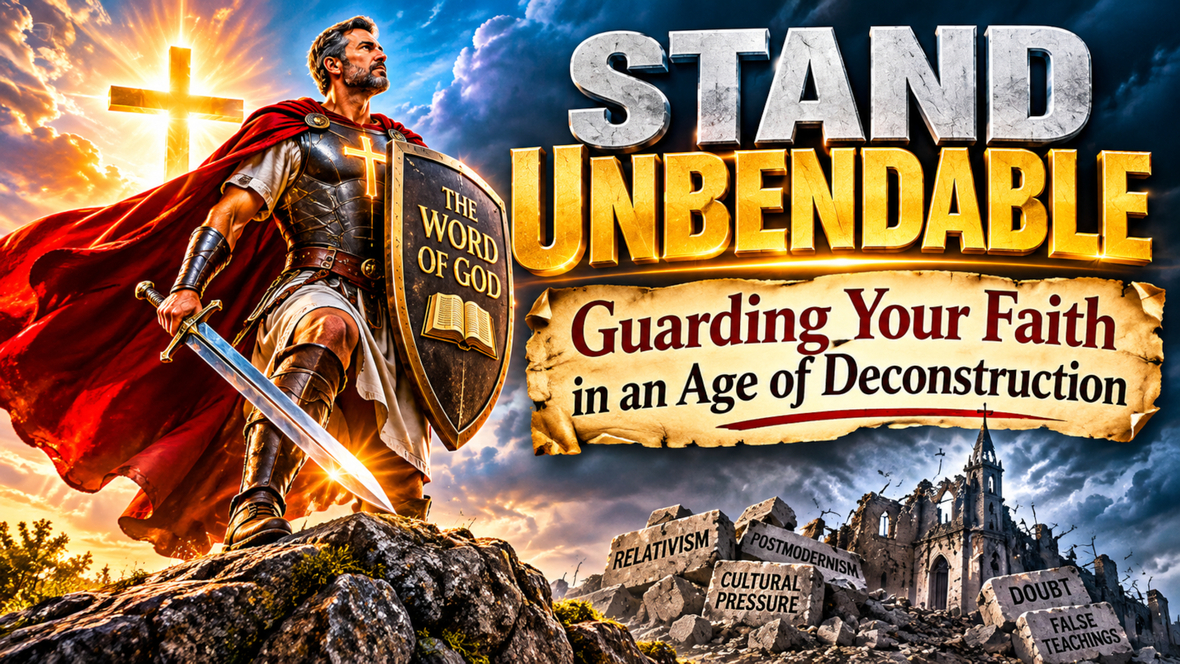 STAND UNBENDABLE Guarding Your Faith in an Age of Deconstruction IntroductionIn previous writings, I shared that after 1992, our culture entered an even more radical phase—the post-truth era. During this era, personal feelings and subjective beliefs outweigh objective facts. The turning point came in 2016 when the Oxford English Dictionary named “post-truth” its Word of the Year. In addition to “post-truth” becoming an official word in dictionaries, a new movement emerged in 2016 called Deconstruction Evangelism.   StatisticsResearch and studies indicate that a significant number of Americans report questioning their inherited faith. For example, in October 2024, Barna Group published findings from a survey of 2,003 U.S. adults conducted in November 2023 . The study found that:• 42% of U.S. adults said they had deconstructed the faith of their youth. • 37% of current Christians said they had done so. • Among practicing Christians, the figure was 36%.The good news is that many people who identified with deconstruction remained Christian and continued attending church, and pastors are increasingly aware of the issue. The question is how are they going to respond and be part of the solution? Moreover, in September 2021, Lifeway Research surveyed 1,000 Protestant pastors; it was republished by the Blair Center in August 2026. It found that:• 73% of pastors were at least somewhat familiar with the concept of deconstruction. • Among pastors familiar with the concept, 27% reported that someone in their congregation had deconstructed their faith during the preceding two years. Dr. George Barna said:Increasingly, American Christianity is based on feelings rather than biblical truth or knowledge. Stunningly few adults in national survey after national survey qualify as biblically-defined disciples. That relates to the small percentage of adults who have established knowing and imitating Christ as their chief goal in life. In the “2026 American Worldview Inventory—Report #4,” based on research conducted by Dr. George Barna and published by the Cultural Research Center, it states:As the nation marks its 250th anniversary, the report shows that the deeply biblical faith that shaped its founding no longer holds majority standing in the American mind. In fact, just half of U.S. adults (50%) believe God is the all-powerful, all-knowing, perfect and just Creator of the universe who rules it today. Other foundational beliefs have also shifted.This should jolt churches out of their complacency and encourage them to stop treating discipleship as the “Cinderella” of the church, relegated to the “back door.” Instead, discipleship should be welcomed through the “front door” as the church’s “Queen.” I believe Jesus would want to see this happen among those who call themselves Christians.  Deconstruction EvangelismIn the following paragraphs, I provide a 30,000-foot view of Deconstruction,” a phenomenon increasingly discussed in evangelical circles. This brief introduction to Deconstruction Evangelism addresses a confusing term with no single or simple definition. According to Jon Bloom, Cofounder of Desiring God: “[Deconstruction] has different meanings in different contexts. It has technical meanings in certain academic contexts and various informal meanings when current and former evangelicals use it to describe their or others’ faith experiences.”Deconstruction Evangelism generally refers to the systematic re-evaluation, questioning, examination, and sometimes dismantling of religious beliefs, dogmas, personal church experiences, or institutional traditions that a Christian previously accepted.Alisa Childers and Tim Barnett define faith deconstruction as “the process of systematically dissecting and often discarding the beliefs one held regarding the Christian faith, often resulting in a complete abandonment of historic, orthodox Christianity.” Deconstruction Evangelism is best understood as the convergence of faith deconstruction with evangelistic influence. It represents a major cultural shift within American Christianity.  OriginsThe term originates from French philosopher Jacques Derrida (1960s), who used “deconstruction” to describe a method of literary critique exposing hidden assumptions, contradictions, and power structures within texts. I like the way Joe Bloom summarizes it: “Deconstruction is a method of literary criticism that takes apart and analyzes an author’s use of language in effort to discern his construct of meaning.” Let’s be sincere, questioning what is going on in the church is not entirely new to Christianity.  The European Crisis of Faith—The Split Between Science and ReligionThe 19th-century Crisis of Faith, often known as the Victorian Crisis of Faith, was a period of widespread religious doubt and intellectual struggle across Europe. A deep psychological and philosophical conflict erupted between traditional Christian faith and emerging secular worldviews. People struggled to reconcile literal biblical teachings with new, rational ways of understanding the world. After the publication of Darwin’s book On the Origin of Species in 1859, the crisis accelerated significantly. Scholars began analyzing the Bible as a historical document rather than the infallible, inspired, and inerrant Word of God. Christianity was greatly affected by the European Crisis of Faith. When? Where? Why? The modern deconstruction movement is generally understood to have emerged specifically as a reaction against late 20th and early 21st-century American White Evangelical culture. This reaction stemmed from the culture’s perceived alignment with partisan politics, purity culture, young-earth creationism, and rigid stances on social issues, particularly LGBTQ matters. This movement raises critical questions for Christians:• Can they distinguish biblical truth from cultural traditions? • Should inherited theological interpretations be reconsidered? • How should Christians respond to those who distrust religious institutions? • What happens when personal experience conflicts with traditional church teaching? • Can the Church engage postmodern culture without compromising the Gospel?Such questions are not inherently unbiblical; many are legitimate concerns that churches need to address.The COVID-19 pandemic, political polarization, controversies involving church leaders, and the expansion of social media created an environment where these conversations became increasingly visible. The movement’s significant momentum gain around 2016 can be largely attributed to social media. Blake Chastain, for instance, coined the hashtag #Exvangelical on his podcast, which quickly gained massive traction across Twitter, Instagram, and later TikTok. A Sad RealityThroughout church history, particularly in the 20th and 21st centuries, churches have always included unconverted, non-born-again believers, disillusioned individuals, and confused attendees. Many have been wounded by the local church, some even spiritually abused by church leaders. From 2016 onward, social media platforms allowed these formerly isolated people to find community, share personal accounts of spiritual trauma, and discuss deconstruction, thus creating a viral subculture. Many seasoned Christians who have written on the subject agree that Christian experiences of deconstruction are complex and often very painful. A more distilled definition of deconstruction from the Christian perspective is: “deconstruction is a critical dismantling of a person’s understanding of what it means to be an evangelical Christian, and in some cases a refusal to recognize as authorities those perceived as occupying privileged evangelical institutional positions who ‘supposedly speak for God.’” 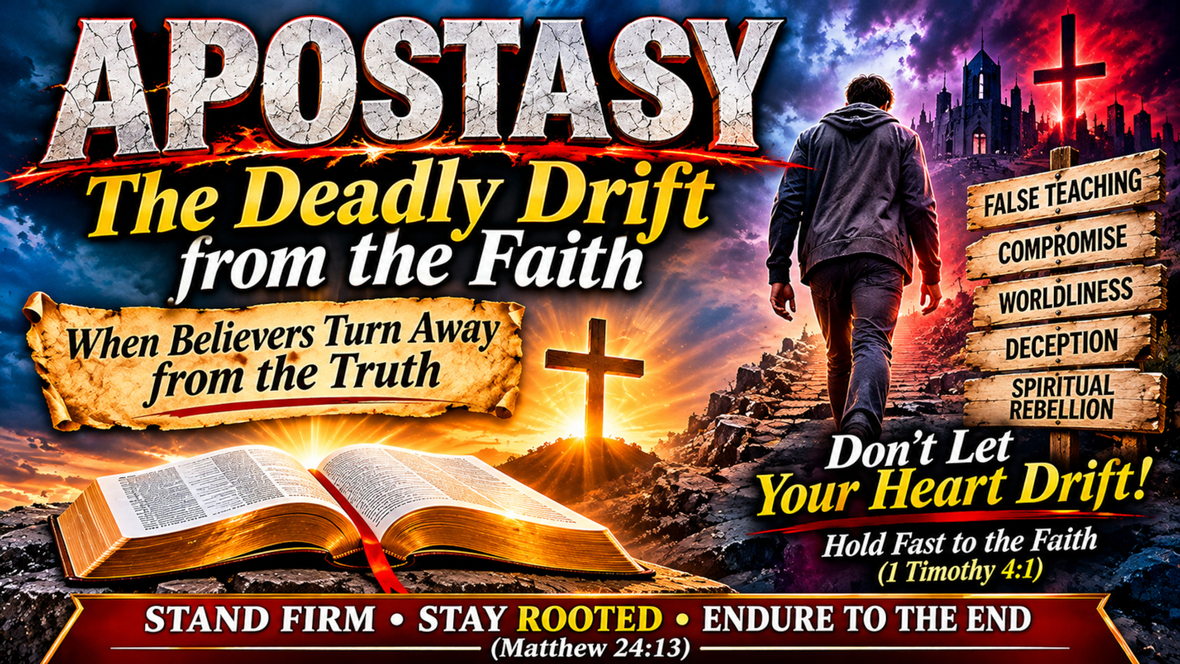 Could This Be a Prelude to Apostasy? Every movement (good or bad) has had its advocates, dedicated activists, and avid promoters. Deconstruction is no different. It spans from individuals seeking a deeper and more reformed Christian faith to those who became totally disillusioned with the Church and left their religion entirely. Sometimes I wonder if this is not the prelude to ‘the apostasy” (NASB), “falling away” (NKJV), “the rebellion” (NIV, ESV), “the great rebellion” (NLT), or “the revolt” (Williams New Testament, Jerusalem Bible), spoken of by Paul in his second letter to the Thessalonians, chapter two! I think it very well could be.Moreover, in a similar context but from a different angle, John alerts believers:They went out from us [seeming at first to be Christians], but they were not really of us [because they were not truly born again and spiritually transformed]; for if they had been of us, they would have remained with us; but they went out [teaching false doctrine], so that it would be clearly shown that none of them are of us. (1 John 2:18-19 AMP)As you can see, the Amplified Bible beautifully explains why church attendees depart from the truth and readily accept falsehoods: “because they were not truly born again and spiritually transformed.” In the same vein, Paul writes: “Now the Spirit expressly states that in later times some will abandon the faith to follow deceitful spirits and the teachings of demons” (1 Timothy 4:1).According to Paul, some churchgoers leave the faith because they are deceived and choose to “follow deceitful spirits and the teachings of demons.” Taken together, the main causes for faith deconstruction are not being “truly born again,” a lack of spiritual discernment, “deceitful spirits,” and “teachings of demons.” Dangers of Deconstruction Evangelism Any movement can be harmful to the Church. Deconstruction Evangelism, or Faith Deconstruction, is one of the most dangerous movements the Church has recently experienced. Its dangers are numerous, including:• Loss of Objective Truth: Rooted in postmodern skepticism, deconstruction can lead to the rejection of absolute truth claims central to Christianity. • Deconversion: A significant portion of those who deconstruct their faith leave Christianity entirely, becoming agnostic or atheist. • Fragmentation and Isolation: The movement lacks shared authority or coherent endpoints, fostering instability and confusion. • Emotional Turmoil: Deconstruction often involves anxiety, guilt, anger, and a sense of destabilization. • Algorithmic Amplification: Social media rewards outrage and skepticism, accelerating emotional reasoning and distrust, as evidenced by documented algorithmic effects in deconstruction communities. Could Anything Good Come Out of This? Many may ask: “Come on, Pastor Valy, this is very gloomy! Is there any positivity in all of this? Could anything good come out of this?” Yes, there is! God can use the deconstruction movement as another tool to rebuke, reform, and help the Church return to her first love. He has done it before; He can do it again! We must pray that the Holy Spirit works behind the scenes to rekindle greater interest in discipleship and spiritual formation.Mature believers do not despair. Mature believers trust in God no matter what. The Church, the Gospel, and the Scriptures are not ours per se; they are Christ’s. He entrusted the work of the Kingdom of God to us, and He is committed to accomplishing everything. If the Church is truly involved in the Great Commission, Christ’s promise still stands: “Lo, I am with you always, even to the end of the age” (Matthew 28:20).  Francis Schaeffer—True SpiritualityIn 1951 and 1952, despite years as a pastor and missionary, Schaeffer experienced a profound crisis regarding the “problem of reality” within the Christian church. He grew deeply concerned by the lack of love, joy, and spiritual vitality he witnessed among Christians, as well as a growing coldness in his own spiritual life. That period of examination provided the foundation for one of his most mesmerizing books, titled True Spirituality. The book wasn’t published until two decades after Schaeffer’s crisis of faith. I highly recommend you read, listen to, and study this book with your small group; you will be truly enriched! In every epoch of Christian history, there were people who did their part to defend the truth. The good news is that there are other Christian writers today who can provide rigorous historical critiques of evangelical culture, such as Kristin Kobes Du Mez and Beth Allison Barr and Beth Allison Barr, historians who wrote academic bestsellers Jesus and John Wayne, and The Making of Biblical Womanhood. I’m sure that the list is longer. What Causes Deconstruction Among Evangelicals? To answer this question, one must consider all accounts. If you have followed my writings, you can probably guess what I am about to say. A significant reason for this movement among churches is the lack of discipleship, which leaves many believers in a state of spiritual immaturity.In the West, generally speaking, the church has failed to embrace discipleship as the vision of Jesus, and therefore, the vision of His church. For decades, the church has grown complacent with the spiritual immaturity of believers, offering attendees seeker-friendly, feel-good, shallow messages that cater to emotions rather than consistently promoting spiritual growth. This approach has deprived most evangelicals of true biblical exposition on pain, suffering, injustice, and a Christian worldview. “When sermons about love, acceptance, and blessing equate to greater attendance and fewer critiques, why kill the mood (and the tithe) with a downer like enslavement to sin or the promise of suffering?”I cannot fathom how seminary-trained pastors can become so preoccupied with “ABC” type churches—solely focused on attendance, buildings, and cash—and completely forget that Jesus’ vision is not about huge crowds, monumental buildings, and fatty bank accounts. His vision has not changed; it is The Great Commission. Anyone who has read the New Testament at least once has been shaken to their core by Paul’s sobering words in 2 Timothy 4:1–5:I solemnly charge you in the presence of God and of Christ Jesus, who is to judge the living and the dead, and by His appearing and His kingdom: preach the word; be ready in season and out of season; reprove, rebuke, exhort, with great patience and instruction. For the time will come when they will not endure sound doctrine; but wanting to have their ears tickled, they will accumulate for themselves teachers in accordance to their own desires, and will turn away their ears from the truth and will turn aside to myths. But you, be sober in all things, endure hardship, do the work of an evangelist, fulfill your ministry.As pastors, spiritual leaders, evangelists, and missionaries, let us be honest: we must accept our share of responsibility, repent, and ask God for a fresh anointing of the Holy Spirit. Let us pray for guidance to be relevant preachers and teachers in this post-truth—or should I say “post-Christian”—era and “fulfill our ministries” as Paul urged Timothy.If our initial reaction is to point fingers, let us refrain, knowing that more fingers point back at us. Instead, let us accept that, under our prideful noses, for decades we have allowed spiritual immaturity and biblical illiteracy to become pervasive, especially among Millennials and Gen-Zers. This has led them to poke holes not in Biblical Truth, but in the current state of the church and in the shallowness of the gospel we preach, just as Paul forewarned.According to sociologists, Europe is deep into the post-Christian era. North America is also profoundly affected, especially with the rise of the “nones” (people claiming no religious affiliation) and secular individualism, which accelerated significantly through the 1990s and 2000s. The Ultimate Intention If you ask me what the end “product” of any local church should be, I will wholeheartedly tell you that Christ’s ultimate intention for His Church is a mature disciple who:• Knows God intimately and personally (John 17:3). • Accepts the call to discipleship and carries the cross daily (Luke 9:23, Galatians 2:20). • Has their mind and character continuously renewed and transformed by the Spirit and the Word of God (Romans 12:2, 2 Corinthians 3:18, Galatians 5:22–23). • Grows and matures into the fullness of Christ (Ephesians 4:11–16, Hebrews 5:11–14, 6:1–3). • Ultimately, multiplies by making disciples according to Christ’s and the apostles’ discipleship model (Matthew 28:19–20, 2 Timothy 2:2).I encourage each of you to take the time to read all these Bible verses from the paragraph above to gain a complete spiritual dimension of Christ’s ultimate intention for us.In my book, Fullness of Christ: Expressing God’s Nature and Character in and through You, I wrote:We must let the Spirit of God satisfy our inner thirst for Him. We must develop genuine intimacy with Jesus by investing quality and quantity time in our relationship with God.We must accept the call to discipleship, count the costs, and overcome all difficulties.We must understand that Christ is not looking for mere converts who aim to be average Christians. God is looking for men and women who are entirely devoted to Him and His purposes. How To Respond to Struggling Christians? The simplest answer is “in truth and love” (2 John 1:3). In reality, however, responding to struggling Christians is not that simple. We cannot ignore the fact that many individuals have been wounded or spiritually abused by the local church, some even sexually assaulted.For many, their experiences were traumatic. If they have reached the point of questioning foundational beliefs, wrestling with doubts, or being hurt by the church, the process was excruciatingly painful—they felt “torn to pieces,” to use Francis Schaeffer’s words. It is important to remember that a deconstructing Christian often experiences significant pain.If you, a loved one, or a friend has gone through this process, you’ve witnessed how frightening, disorienting, and disturbing it can be. If you are currently navigating a journey of confusion and doubt, do not fall prey to the enemy’s lies and isolate yourself; instead, reach out for support. I am also here to assist you in any way I can.Hurt, confused, and defeated people need God’s grace, not our incriminating judgment. Because of His unconditional love for humanity, God sacrificed His only begotten Son (John 3:16). We must be “grace givers” without compromising God’s truth and our Christian values. Let’s offer them pastoral counseling “for edification according to the need of the moment, so that it will give grace to those who hear” (Ephesians 4:29). I appreciate Bloom’s recommendation:So, as we seek to extend the grace of Christ to someone experiencing deconstruction—however passively or actively, however privately or publicly—it will be important to press in carefully, ask clarifying questions, and listen well, to inform how we do or do not respond, so that our love may “abound more and more, with knowledge and all discernment” (Philippians 1:9)”Churches should provide an environment where people can express doubts without humiliation, feeling free to ask questions about suffering, biblical interpretation, science, church history, or Christian morality. Pastors should be adequately equipped to engage in these heart-probing conversations, responding with kindness and compassion: “That is an important question. Let’s investigate it together.” It is imperative for churches to provide:• Adequate pastoral counseling • Provide trauma-informed care • Educational seminars on mental health, pornography, and sexual addiction • Most importantly, pastors should address current cultural trends, including faith deconstructionMoreover, churches should be willing to acknowledge when a particular tradition, political ideology, or institutional practice has been mistakenly presented as essential to the Gospel. The Church must never confuse loyalty to a human institution with loyalty to Jesus Christ. Churches should invest more in discipleship than any other department.The goal is not to produce Christians who never encounter doubt but to develop believers who can respond to difficult questions with understanding, humility, and confidence grounded in truth. Paul’s goal for Christian maturity was that believers would no longer be children, “tossed here and there by waves and carried about by every wind of doctrine” (Ephesians 4:14, NASB). Therefore, churches should cultivate spiritual formation, Christian character, a deeper knowledge of the Word of God, and biblical obedience. Personal Note Most, if not all, of those who have strayed from the Truth have experienced trauma in their family of origin or in their churches. Many have been disoriented, disillusioned, or disappointed by God. In high school or college, they were unprepared to deal with cultural trends, and their understanding of apologetics was insufficient to withstand some professors’ aggressive stance toward Christianity. Only they and God know the depth of their pain.My recommendation is not to judge them; instead, pray that the Holy Spirit continues to intercede for them. I often tell people: “As long as there is still a pulse in their veins and breath in their lungs, people are savable.” If a person asks me: “Pastor Valy, can God forgive me after all that I have done?” I ask them: “Do me a favor: Breathe on your phone screen. Take your own pulse. Then tell me if there is any condensation on the screen and confirm that you still have a pulse.” If their answer is “yes,” I tell them: “You are still savable!” A Great Opportunity for Radical Change The Church can consider this situation a great opportunity to shape a better future for the current generation and pave a solid path for future generations. Therefore, the future depends, in part, on whether the Church can respond to this phenomenon with both theological conviction and genuine compassion. I truly believe that if churches master combining biblical faithfulness with intellectual honesty, and pastoral integrity with intentional discipleship, they will be much better equipped to assist people in navigating their questions without losing sight of the Gospel of Grace.I am very encouraged by the words of James: “My brethren, if any among you strays from the truth and one turns him back, let him know that he who turns a sinner from the error of his way will save his soul from death and will cover a multitude of sins” (James 5:19–20). 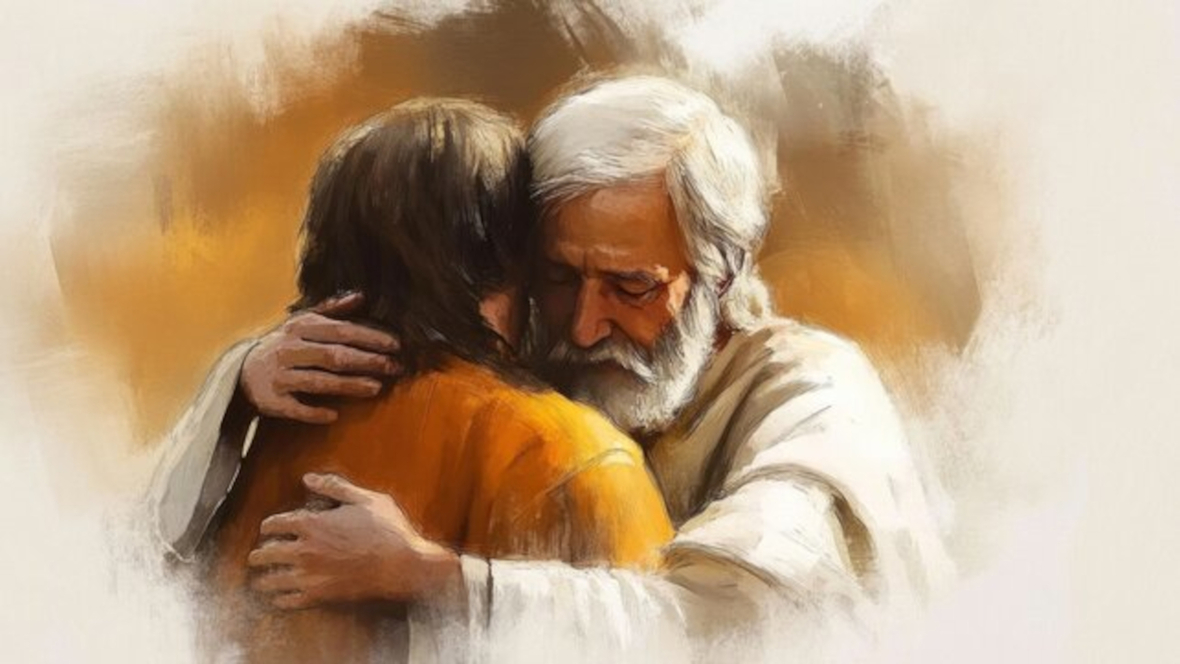 Closing Thoughts Not too long ago, I had a lengthy discussion with a friend on this very subject: How should the church assist people who are undergoing the turmoil of deconstruction or who have already strayed from Christianity? I suggested: “Let’s use the parable of the Prodigal Son to extract wisdom and guidance on how to treat those who have wandered from faith.” Then, paraphrasing the parable from Luke 15:29–30, I recounted the story in my own words.A father had two sons. When the younger son approached his father and asked for his share of the inheritance, the father did not say, “Over my dead body!” Instead, he granted his request. You know the story: The young man took his inheritance and traveled to a foreign country. From that point on, the father consistently went to the edge of his property, gazing toward the horizon, hoping to see the Prodigal Son return home. Day after day, week after week, month after month, the father refused to give up on his son.After some time, the prodigal son exhausted his inheritance and found himself working as a hired servant, caring for pigs—perhaps the greatest humiliation for a Jew. At one point, he became so hungry that he realized that in his father’s household, no one lacked food, clothing, or shelter. He came to his senses and had a serious conversation with himself:I will get up and go to my father, and will say to him, ‘Father, I have sinned against heaven, and in your sight; I am no longer worthy to be called your son; make me as one of your hired men.’” (Luke 15:18–19) So, he embarked on the long journey back home. The Bible states that from a distance: “his father saw him and felt compassion for him, and ran and embraced him and kissed him” (Luke 15:22). T The son hadn’t even finished his confession and apology when the father said: Quickly bring out the best robe and put it on him, and put a ring on his hand and sandals on his feet; and bring the fattened calf, kill it, and let us eat and celebrate; for this son of mine was dead and has come to life again; he was lost and has been found. (Luke 15:22–24) When the older brother came home after a long day of hard labor in his father’s fields, he heard the noise of music and joyful celebration. He asked, “What is going on?” One of the servants told him: “Your brother has come, and your father has killed the fattened calf because he has received him back safe and sound” (Luke 15:27). What was the older brother’s reaction? You know this story. He wasn’t happy. In fact, he was angry that the father treated his younger brother with such grace. The father tried to reason with him and invited him to celebrate his brother’s return, but the older brother refused.Then I said to my friend: “Let’s be honest. If we look through the lens of grace and focus on the cross, who is the real prodigal in this story?” My friend replied: “Obviously, the older brother. He was the real prodigal son.” What attitudes might we have in similar situations? We might say:Look! I’ve been serving in this church faithfully for many years, and nobody threw me a party. But when this rascal came back to church after wasting his life in the world, living like the world, they decorated the church, brought the best worship group, and ordered expensive food to celebrate his return. This is not fair, God! At the conclusion of our conversation, I said:“Well, let’s offer those people who wander from the faith the grace and support which the father offered to his younger son. Let’s disciple them, help them grow in the grace and knowledge of our Lord Jesus. Let’s reinstate them among the congregation and love them as we love other believers. Can the church do that? I’m afraid that many churches would not even consider receiving any of them back.”  Great Opportunity for Spiritual Growth If you desire to fortify your faith—to grow deeper, stronger, and more rooted in Scripture—then I warmly encourage you to consider enrolling in Teleios International School of Ministry. This platform will not only support your spiritual growth; it will accelerate it. You will learn, mature, and flourish in ways that will transform your walk with Christ. Whatever challenges life brings your way, you will be able to stand firm and “contend earnestly for the faith which was once for all handed down to the saints” (Jude 1:3).    PS: This Teaching Bog is complex and I highly encourage you to read it carefully a couple of times. Needless to say that it is paramount that you SUBSCRIBE to receive my monthly Teaching Blogs.Note: URFM is a non-profit ministry fully supported by your DONATIONS (see Galatians 6:6).May God Bless you All!Valy VaduvaMA in Spiritual Formation and Leadership (MASFL) Board Certified Pastoral Counselor (BCPC) Master Mental Health Coach (BCMMHC)“He heals the brokenhearted and binds up their wounds” (Psalm 147:3).Do you want to heal? Do you want to grow spiritually? Do you need a Spiritual Mentor? Do you want to study? Resurse în Românește pentru Formare Spirituală Disclaimer The internet, news stations, blogs, articles, and books are not 100% reliable; they only provide the angles they consider most fitting at the time. During my research for this teaching blog, I did my best to use what I considered reliable sources. Please do not use the affirmations provided here without prayer, discernment, or personal investigation. My motivation is to assist believers on their journey of transformation, not to demean or humiliate others. Only God knows the motivations of the heart; He, and He alone, is the Judge. No one knows the thoughts of men better than the Spirit of God (see 1 Corinthians 2:15). More Resources for Spiritual GrowthClick to get Fullness of Christ.This book is a powerful tool! When adequately applied in one’s life, the content of this book can radically transform your life!“Fullness of Christ” teaches you how to live from the new heart Jesus gave you. Click to get The Great Commission.This book challenges us to think of radical discipleship and spiritual transformation.It is an excellent discipleship tool for small groups, including discussion questions and lesson plans. Click to get The Journey of Transformation.This book: Is an excellent discipleship and life coaching tool for small groups with reflection questions at the end of each chapter.It provides Jesus’ followers tools to identify their own flesh patterns before receiving pastoral counseling and invites them to bring it to the cross. Click to get Grace Rediscovered.This book reveals the awesomeness of God’s grace and equips Christ’s disciples with how to appropriate it in all aspects of their lives. It is an excellent discipleship tool for pastors, mentors, and small group leaders. Click to get The Dangers.The book is a must read for every believer. It exposes five great dangers of spiritual immaturity, among which the critical one is “Spiritual Identity Ignorance.”Let us stop perpetuating the negative statistics when it comes to discipleship and spiritual growth, instead, he encourages every Christian to “press on toward the goal for the prize of the upward call of God in Christ Jesus” (Philippians 3:12). Click to get Victorious.Have you ever wondered why most believers feel defeated instead of victorious? Simply put, they do not have an accurate view of God and His grace and lack a deep, personal understanding and experiential knowledge of who they are in Christ, the wisdom that comes from personal encounters with God.Romanian Books/ Cărți in Românește Apasă aici să obții În Căutarea Semnificației.Dumnezeu ne-a creat cu o nevoie profundă de a fi iubiți și acceptați. Din nefericire mulți dintre noi am crescut fără sa primim iubire și acceptare necondiționată. Părinții, bunicii, și profesorii ne-au spus in mod repetat: „Te iubesc dacă…” „Te accept pentru ca…” „Meriți asta pentru ca…” „Îți voi da asta când…” și așa mai departe. Apasă aici să obții Plinătatea lui Hristos.Prin citirea acestei cărți vei experimenta puterea iubirii așa cum nu ai mai experimentat-o până acum și vei descoperi modalități de a exersa umblarea în dragoste.Această carte, îți va reaprinde pasiunea pentru Hristos. Apasă aici să obții Spiritualitatea Emoțională Sănătoasă.Spiritualitatea creștină, fără integrarea sănătății emoționale, poate fi ucigătoare – pentru tine, pentru relația ta cu Dumnezeu și pentru cei din jurul tău.Realitatea cruntă este că: „Este imposibil să fii matur spiritual dacă rămâi imatur emoțional.” Apasă aici să obții Spiritualitatea Emoțională Zilnică.Majoritatea creștinilor din ziua de astăzi sunt deficitari din punct de vedere spiritual, în special atunci când este vorba de a petrece timp cu Dumnezeu. Cartea aceasta te poate ajuta în mod efectiv să practici timp de calitate cu Isus . Apăsați aici să obțineți Cel ce sfarama lanțurile robiei“Cel ce sfarama lanțurile robiei” împărtășește puternicul adevăr care va zdrobi cele mai înrădăcinate obiceiuri sau păcate intime. Arată-mi dovada că ai achiziționat 1, 2, 3 dintre cărțile mele și am să vă trimit cartea aceasta CADOU.       ©2026 Upper Room Fellowship Ministry | 34142 Trillium Ct.,, Livonia, MI 48150, US Like Tweet in Web Version Forward Unsubscribe Powered by GoDaddy Email Marketing ® |
Categories: Articole de interes general
 Cum explicați asta?
 Sfat de pe un site creștin


Leave a Reply