
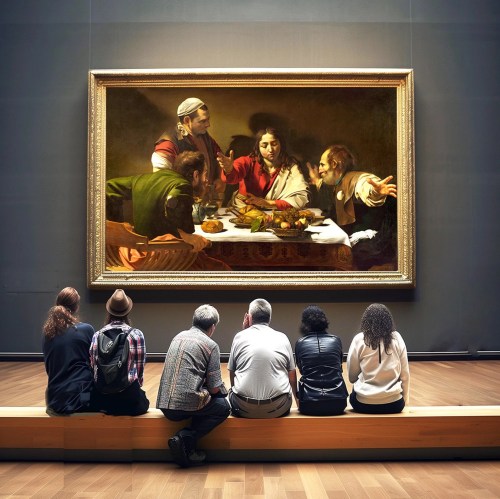
Nu, nu am o părere bună despre acest pictor italian. Tot ce vreau este să scot în relief metoda vremii în pictură și iscusința artei lui.
Mulți trec repede ca să poată spune că au văzut. Puțini se așează ca să privească îndelungat, căutând să înțeleagă.
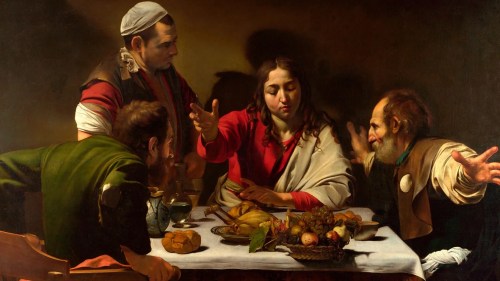
Caravaggio îi pictează pe ucenici ca tine și ca mine, unul cu început de chelie. Altul cu haina ruptă în cot …
Pictorul predică prin amănunte. Isus nu mai poartă barbă, semn al învierii care-l ține ascuns de privirile lor. Hangiul nu schițează nici o emoție, semn că nu înțelege numic. Cei doi ucenici însă pricep și explodează în surpriză și uimire.
Cel din dreapta face cu mâinile semnul răstignirii. Cel din stânga dă să se ridice în respect. Coșulețul aproape suspendat din prim plan este invitația să stai și tu la masă. Fiecare fruct, mai ales mărul care începe să se strice, are un mesaj pentru tine. Întrebarea care ți se pune este dacă poți completa semnul peștelui cum făceau primii creștini ca să se recunoască. Ca să te ajute să înțelegi, umbra de pe fața de masă este și ea a unui … pește. Ești sau nu ești? Isus te invită cu mâna întinsă.
Caravaggio’s The Supper at Emmaus features a snag in a wicker basket that mirrors an underground Christian emblem, writes Kelly Grovier.
Sometimes a flaw isn’t a flaw at all but a flourish – a stroke of genius. Take, for example, the tiny fray in the weave of the wicker basket that teeters on the edge of the table at the centre of Michelangelo Merisi da Caravaggio’s early 17th-Century masterpiece The Supper at Emmaus, among the greatest treasures in the rich collection of the UK’s National Gallery. Though countless eyes have marvelled at the mysterious drama unfolding in the shadowy interior of the inn in which the recently resurrected Christ has just revealed his true identity to a pair of dumbstruck disciples, the significance of an almost imperceptible imperfection has gone unnoticed in the four centuries since the painting was commissioned by the Italian nobleman Ciriaco Mattei in 1601. A loose twig, sticking out from the plait of the woven fruit bowl, is a dainty defect from which the work’s truest meaning can be unravelled. Alone among the countless symbols that punctuate the religious painting, this delicately described detail – half in shade, half in light – transforms Caravaggio’s celebrated canvas from a mere illustration of scripture scene into something active and daring – a spiritual challenge whose stakes could not be higher.
Categories: Articole de interes general


Leave a Reply