
The term “secret society” encompasses a wide variety of exclusive and clandestine organizations, many of which have been in existence for centuries and count some of history’s most influential figures among their members. Secret societies pique our curiosity because they often keep their activities and objectives concealed from nonmembers and the public. Though there are exceptions, the intentions of these exclusive groups are generally not nefarious; for instance, some college clubs can be considered secret societies because they have private rituals and traditions whose symbolism and mystique serve to create a sense of belonging and shared purpose.
The most prominent secret societies have left their mark on history, from wielding their influence over governments to shaping the course of labor and religious movements. Because of the secretive nature of these organizations, their historical origins can be complex to track down, and are often debated by historians and scholars. From the medieval beginnings of the Freemasons to the puzzling origins of Cicada 3301, here are six unusual facts about these mysterious groups.
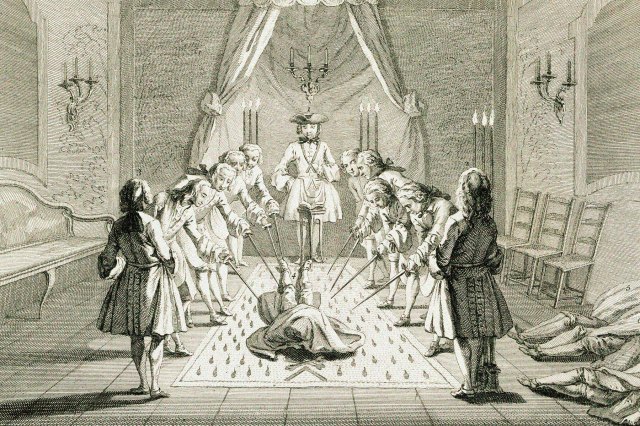
One of the World’s Oldest Secret Societies Still Flourishes Today
The history of the Freemasons dates back to the Middle Ages and the guilds of skilled stonemasons who regulated the qualifications of the stoneworkers. Their work required stonemasons to travel, encouraging a more open-minded worldview. The modern Freemasonry society was founded in England in 1717 and quickly spread throughout Europe and the American colonies. The organization established guidelines not only for stonework, but also for the moral and spiritual values of its members. Today, there are over 6 million Freemasons around the world. They still use the same system of secret rituals — including handshakes, passwords, and symbols — that have been used since the 18th century, but in recent years the group has begun making moves toward modernization and transparency. In 2021, the Freemasons issued the first annual report in their 300-year history.
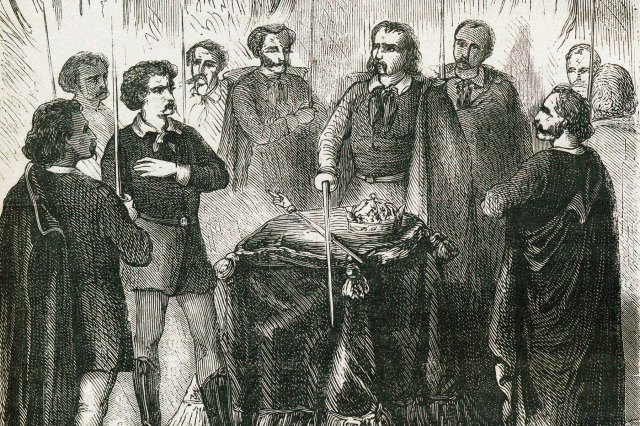
The Real Illuminati Was Interested in Enlightenment for All
The name “Illuminati” has been used to refer to various groups, both real and fictional, since the 15th century. But the group most closely linked to the name dates back almost 250 years to the Bavarian Illuminati, formally known as the Order of the Illuminati. The short-lived secret society was founded in Ingolstadt, Bavaria, in 1776 by German professor Adam Weishaupt, who wanted to create “a state of liberty and moral equality, freed from the obstacles which subordination, rank, and riches, continually throw in our way.” Taking inspiration from the Freemasons and French Enlightenment philosophers, Weishaupt formed a secret society that climbed to more than 2,000 members in Bavaria, France, Hungary, Italy, and other regions where Enlightenment ideas were taking hold. The Bavarian government eventually shut down the Illuminati in 1784, prohibiting the creation of any groups not authorized by law. But there were those who believed the society went underground, spawning a number of conspiracy theories that linked the group to world events, from the French Revolution to the 9/11 terror attacks.

Enslaved Women Founded America’s Oldest Secret Society of Black Women
The annals of history are filled with the names of secret societies whose membership was exclusive to men, but women have also had a role in creating these clandestine groups. The United Order of Tents is the oldest organization of Black women in the United States, founded by two formerly enslaved women, Annetta M. Lane and Harriet R. Taylor, in Norfolk, Virginia, in 1867. The organization, which still maintains chapters throughout the United States, is believed to have supported operations of the Underground Railroad. During the turbulence of the Reconstruction era, the group provided mutual aid and support to the Black community, serving as a “tent of salvation” turning their time of need.

An Ancient Secret Society Inspired a Video Game Franchise
In the 11th century, the Nizari Ismailis were a group of powerful medieval Shiite Muslims in Persia and Syria. The group used guerilla tactics to outwit their enemies, including Christian Crusaders arriving in the Holy Land. Hated by other Muslim groups, they were given the name Hashishin, a pejorative Arabic word meaning “hashish user,” which was later westernized by Crusaders as “Assassins” and the English word came to mean a paid killer. The group fell to the Mongols in the 13th century, but the legend of the Nizari Ismailis lives on. The video game “Assassin’s Creed” creates a fictionalized world based around the Assassins and another ancient secret society, the Knights Templar, a military order established in the 12th century and endorsed by the Catholic Church. The Knights Templar served as protectors of Christian pilgrims and Crusader states in the Holy Land, but their objectives differed from those of the Nizari Ismailis. Though the timelines of the two groups overlap, there is no historical evidence to support that the two groups fought each other.

One Secretive Club Has Its Own Elite Summer Camp
Among all of the exclusive societies, the Bohemian Club may be the only one with its own elite summer camp. Founded in 1872 in San Francisco as an exclusive gentlemen’s club for journalists, artists, and musicians, the Bohemian Club expanded to include international political and business leaders as well. Bohemian Grove, the club’s privately owned 2,700-acre campground in the redwood groves of Sonoma County, provides a gathering place for a two-week summer encampment that includes secret rituals, performances, and private discussions that have changed the course of history. At the 1967 Bohemian Grove encampment, Richard Nixon and Ronald Reagan reportedly decided which of them would pursue the Republican presidential nomination. At a September 1942 gathering at Bohemian Grove, physicist Robert Oppenheimer attended an S-1 Executive Committee planning meeting to finalize details for the Manhattan Project, leading to the development of the atomic bomb. Given the privileged and private membership and traditions, it’s not surprising that the group has been the subject of conspiracy theories and protests and, most recently, a lawsuit alleging wage theft and labor violations.
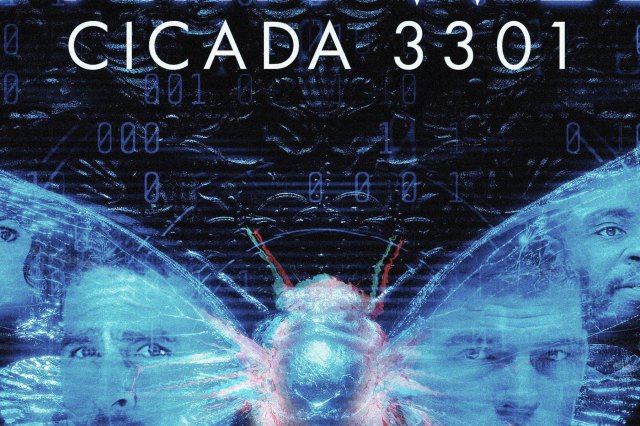
New Secret Societies Are Finding a Home Online
Though secret organizations have existed for centuries, the internet has given rise to new ones in recent years. One of the most enigmatic is Cicada 3301, which appeared online in 2012. The group claimed to be searching for “highly intelligent individuals” by presenting a series of complex digital puzzles based on cryptographic techniques including ciphers, codes, and steganography. Solving the puzzles involved a wide range of knowledge about coding, programming, literature, art, and other disciplines. There was some speculation that the puzzles were being used as a recruitment tool for intelligence agencies, while others thought they might be part of the promotion of a new game, though no attempt was ever made to monetize the puzzles. Those who solved the early puzzles were presented with additional challenges and login credentials for a darknet site. The group’s identity remains unknown and they have been largely silent since 2014.
Categories: Articole de interes general
 Barzilaiendan
Leave a comment