
Henry Kissinger in 10 Quotes

November 30, 2023
A complex and controversial man, Kissinger was both marked by his Jewish identity and at times publicly rejected it.
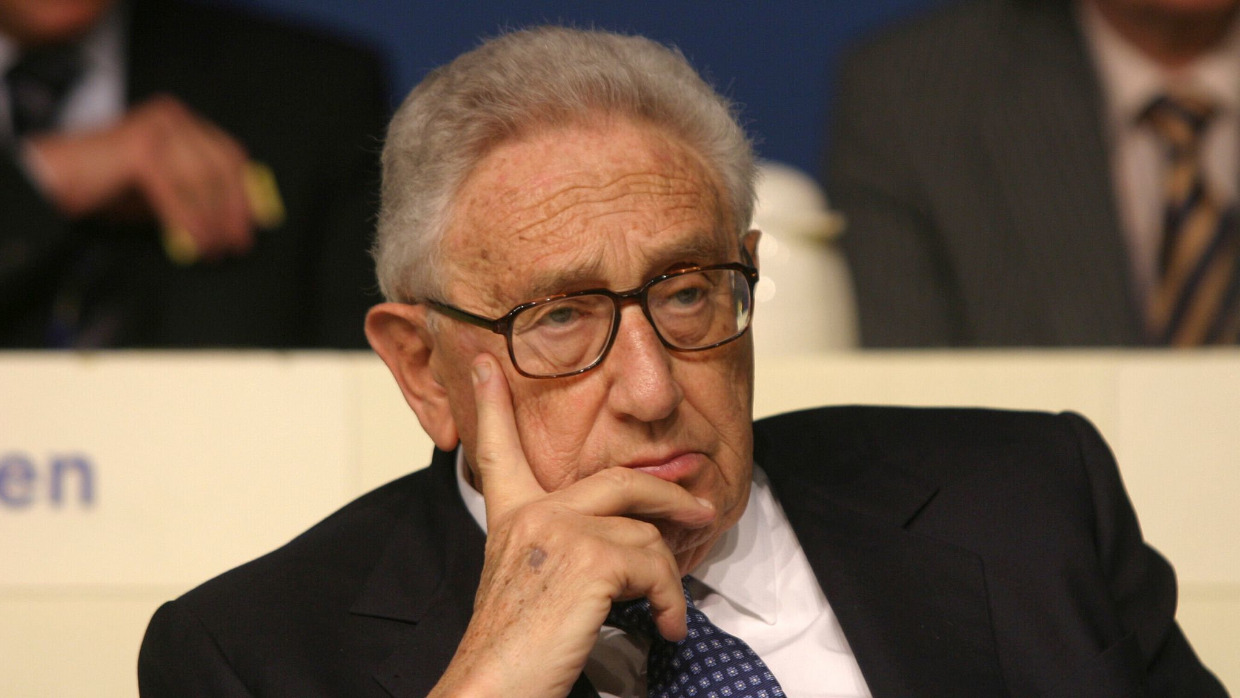
Born in 1923 in the German town of Furth, Henry Kissinger, who has died aged 100, rose to become one of the most influential National Security Advisors and Secretaries of State ever to serve in the United States – and one of the most consequential and well-known Jews of modern times.
Kissinger advised 12 American presidents, wrote dozens of books on politics and foreign policy, and helped bring about some of the most consequential political breakthroughs of the 20th century. Kissinger helped open American diplomacy to China in 1972, orchestrated America’s controversial extrication from the Vietnam War, helped end the Yom Kippur War in 1973, pave the way for the Israeli-Egyptian peace treaty in 1979, and helped rachet down tensions between the USA and USSR during the peak of the Cold War.
A complex and controversial man, Kissinger was both marked by his Jewish identity and at times publicly rejected it. Here are 10 quotes by and about Henry Kissinger that give a sense of the many contradictions of this brilliant, complicated statesman.
1.“I have reached a stage where I speak no language without an accent.” – Henry Kissinger https://www.bloomberg.com/opinion/articles/2023-11-30/as-heinz-and-henry-kissinger-brought-germany-redemption
SUBSCRIBE
Our weekly email is chockful of interesting and relevant insights into Jewish history, food, philosophy, current events, holidays and more…GET OUR EMAILS
When he spoke to crowds in Germany, Kissinger used to enjoy opening his speech in American-accented German before switching to German-accented English, before commencing on his inability to speak either language like a native. This oft-repeated joke masked the trauma of Kissinger’s horrific childhood in Germany.
Kissinger was born into a middle class, traditional Jewish family. His father Louis Kissinger was a high school teacher; his mother Paula (Stern) Kissinger was a housewife. The Kissingers had another son, Walter, when Henry (his original name was Heinz) was a year old. Together, the family attended a local Orthodox synagogue.
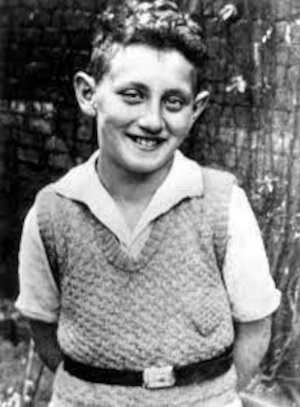
Henry was studious and also passionately devoted to soccer. When the Nazis came to power in 1933, Jews were forbidden from playing in stadiums: signs saying Juden Verboten (Jews Forbidden) appeared in public places. Henry disregarded them for a time, playing soccer with his friends in secret. But soon, Nazi restrictions couldn’t be ignored. His father lost his teaching job, and his family was suddenly plunged into penury. When Henry was 15, he and his family fled Germany, settling in New York. Henry Kissinger later maintained when speaking to reporters that he couldn’t remember anything about his life in Germany.
2. “In my heart, I knew they would have burned us with the others if we had stayed.” – Paula Kissinger (Henry Kissinger’s mother)
Over a dozen of Henry Kissinger’s close family members died in the Holocaust. His mother Paula realized that had they remained in Germany, Henry, his brother, and his parents would have been murdered as well. It was a lesson that Kissinger – known for his hard-nosed realpolitik – would never forget.
3. “The intellectuals, the idealists, the men of high morals had no chance… (Holocaust survivors) had learned that looking back meant sorrow, that sorrow was weakness, and weakness synonymous with death.” – Henry Kissinger (quoted in Kissinger 1923-1968: The Idealist by Niall Ferguson: 2016)
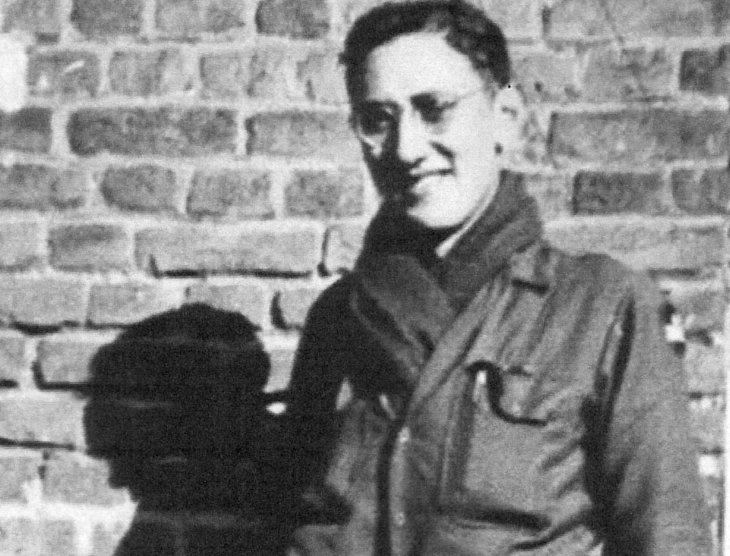
Kissinger was drafted into the United States Army during the Second World War. Towards the conclusion of the war, he was sent to Germany where he worked as a translator, interrogating captured Nazi officials and going through their mail and documents. After the end of the war, Kissinger travelled to his hometown of Furth. He found that out of hundreds of Jews who’d lived there before the war, only 37 remained. Historian Niall Ferguson found the above quote in a letter that Kissinger wrote at age 23, after meeting some of these ragged Holocaust survivors.
4. “The emigration of Jews from the Soviet Union is not an objective of American foreign policy, and if they put Jews into gas chambers in the Soviet Union, it is not an American concern. Maybe a humanitarian concern.” – Henry Kissinger speaking to Pres. Richard Nixon, 1973
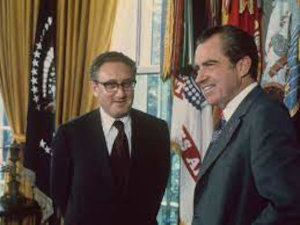
Pres. Richard Nixon and Henry Kissinger, his Secretary of State, had what might be described as an abusive relationship when it came to Kissinger’s Jewish identity. As the New York Times reported: “The Watergate tapes revealed Mr. Kissinger spending humiliating hours listening to the president’s harangues, including antisemitic comments delivered to his Jewish secretary of state…. After returning to his office, he (Kissinger) would roll his eyes as he told his closest colleagues about Nixon’s bizarre behavior.” This quote, in which Kissinger seems to oppose efforts to link the cause of Soviet Jews to political talks with the Soviet Union, was captured on tape and came to light only in 2010.
5. “For someone who lost in the Holocaust many members of my immediate family and a large proportion of those with whom I grew up, it is hurtful to see an out-of-context remark being taken so contrary to its intentions and to my convictions, which were profoundly shaped by these events. References to gas chambers have no place in political discourse, and I am sorry I made that remark 37 years ago.” – Henry Kissinger in The Washington Post, 2010
When the tape capturing his remarks above came to light, Kissinger promptly apologized.
6. “Heinz – recognize me? Wilhelm Furtwängler from Furth. Remember?” – Prof. William Fort (quoted in The Prime Ministers: An Intimate Narrative of Israeli Leadership by Yehuda Avner: 2012)
In his 2012 memoir, Israeli politician Yehuda Avner recounts a fascinating encounter he observed in Israel in 1974. Avner’s friend Willie Fort, an American psychiatrist and professor at Johns Hopkins, and Avner listened to Henry Kissinger deliver a speech in the King David Hotel in Jerusalem. Afterwards, Prof. Fort eagerly greeted Kissinger, only for Kissinger to stare at him coldly and pointedly ignore him.
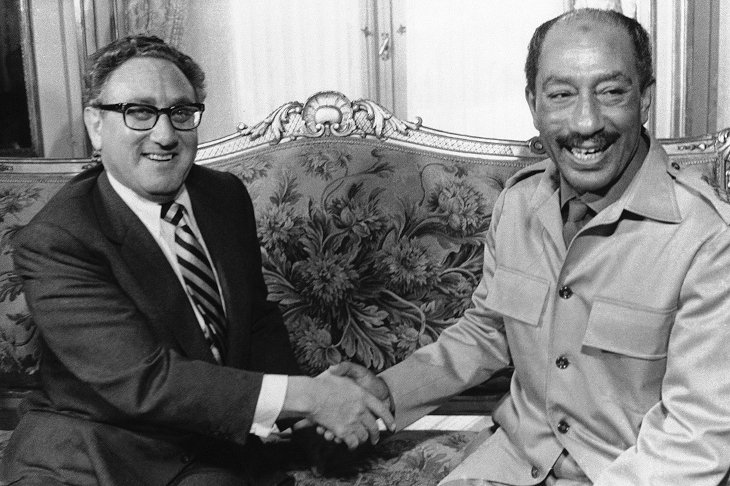
Prof. Fort told Avner that as children in Germany, he and Henry Kissinger had been the best of friends. “Henry Kissinger…habitually insisted he had no lasting memories of his childhood persecutions in Germany,” Prof. Fort said. “This was nonsense! In 1938, when Jews were being beaten and murdered in the streets, and his family had to flee for their lives, he was …fifteen. At that age he would have remembered everything: his feelings of insecurity, the trauma of being expelled, of not being accepted; what it means to lose control of one’s life… Those demons would never leave Henry Kissinger, however hard he tried to drown them in self-delusion.”
Kissinger was a divisive figure in America in general, and puzzled many Jewish observers, who wondered at his apparent disregard for his Jewish identity.
7. “I recall particularly vividly my visit to Kibbutz Ginosar…on the shores of the Sea of Galilee. Every square inch of its intensively cultivated soil had been wrested by faith and suffering… Across the Sea of Galilee I remember seeing a solitary fishing boat at the edge of the escarpment of the Golan Heights, within easy range of Syrian rifles…. Here were a people, sustained by faith through two millennia of persecution, come to reclaim dreams that for all this time had been more powerful than their tragic reality.” – Henry Kissinger, recalling one of his first visits to Israel, as a private citizen, in the 1960s (quoted in Henry Kissinger White House Years: The First Volume of His Classic Memoirs by Henry Kissinger: 1979)
Kissinger began his career as a professor at Harvard. One of his most famous classes was his International Seminar on international politics. In 1957, a young Israeli named Yigal Allon took Kissinger’s seminar. Allon later became Deputy Prime Minister and Foreign Minister of Israel. Kissinger visited Allon at his home on Kibbutz Ginossar on the shores of the Sea of Galilee.
8. “Then the question of resupplying Israel came up… The Pentagon was strongly opposed to any resupply of American equipment. So we arranged that the Israelis send their own airplanes and we would load them up.” – Henry Kissinger, describing aid America gave to Israel during the Yom Kippur War, 1973
During the Yom Kippur War in 1973, the United States – facilitated by Nixon and Kissinger – launched a top-secret project called Operation Nickel Grass to send military supplies to Israel. By the end of the 19-day war, the US had sent 8,755 tons of materiel. In total, the US sent over 22,000 tons of materiel over a month-long period, in 740 flights.
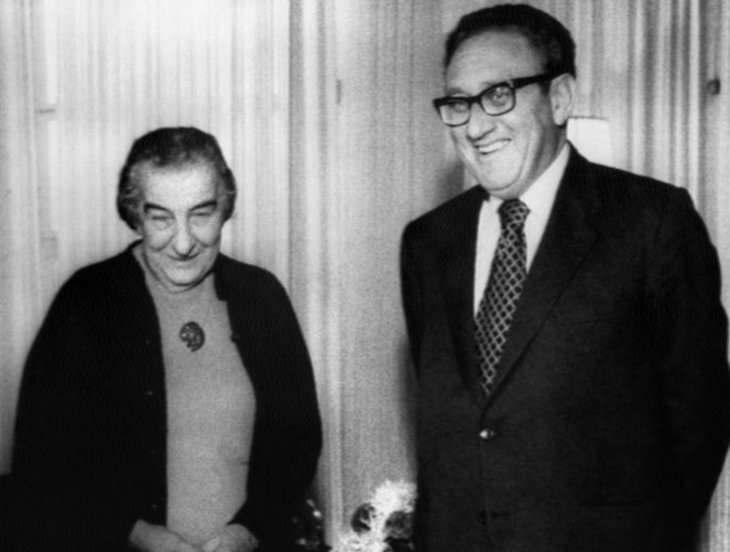
In a whirlwind of shuttle diplomacy – a term that he helped popularize – Kissinger managed to broker a ceasefire and, later, a peace agreement between Israel and Egypt.
9. “The security of Israel is a moral imperative for all free peoples.” – Henry Kissinger, 1977
Soon after leaving office, Kissinger made this stirring declaration. He began to publicly support Israel more, and later on was vocal in his opposition to Iranian nuclear designs.
10. “The emergence of Hamas as the dominant faction in Palestine should not be treated as a radical departure… Even relatively conciliatory Arab statements…reject Israel’s legitimacy as inherent in its sovereignty… Only a small number of (Palestinian) moderates have accepted genuine and permanent coexistence (with Israel).” – Henry Kissinger in 2006 https://www.henryakissinger.com/articles/whats-needed-from-hamas/
Henry Kissinger remained vital and brilliantly engaged in foreign policy well into his late 90s. In his later years, he repeatedly warned against the nihilistic violence of extremist Islamist groups such as ISIS and Hamas, as well as against Hamas’ warmongering sponsor, Iran.
Complex and gifted, Henry Kissinger was a virtuoso at diplomacy in a career that spanned most of a century. He seemingly was deeply troubled by his identity as a Jew, by turns ignoring and celebrating his Jewishness. Henry Kissinger’s death leaves the world a poorer place. His legacy will be long remembered.
Categories: Articole de interes general
 Barzilaiendan
Leave a comment