
O viață de om este o școală. Titus Dan a scris-o în limba engleză, pentru că i-a fost mai ușor. Ne-a fost trimisă prin amabilitatea lui Liviu Percy
+++++
“Fear not for I am with you,
Be not dismayed, for I am your God;
I will strengthen you,
I will help you,
I will uphold you
With my victorious right hand.”
Isaiah 41:10
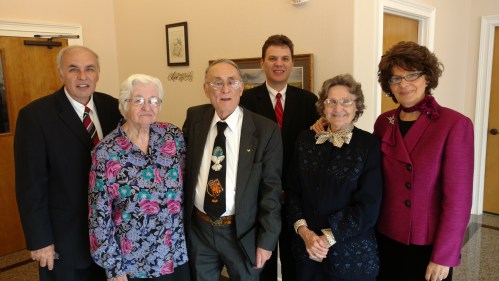
Emanuel Titus Dan: A Memoir
I was born in Cluj, Romania on May 15, 1933. My parents, Ioan and Ana, both Baptists, took great pains to rear me and my five siblings in the church and in accordance with the Word of God. My father was converted to a living faith in Jesus Christ in the trenches of World War I, where he received Christ through the preaching of a German military chaplain. When he returned home, he became one of the promoters of the Baptist faith in the city of Cluj and the surrounding area, putting forth a fruitful effort in the establishment of the first Romanian Baptist Church of Cluj. Today there are three Baptist churches in Cluj, and dozens of others in the neighboring regions, many of which my father planted. Through his work and activity among the Baptist brotherhood, he was highly esteemed and appreciated, and in 1928 he was elected as the President of the Baptist Young People’s Union in Romania. In 1945 he was elected as the President of the Baptist Union in Romania and re-elected in 1948 to the same position. During this entire period until 1963 when he retired, he worked to support our family and the church as an administrator of the Regional Laboratory of Hygiene in Cluj. After his retirement he continued to work within the Baptist Association of Cluj which comprised several districts.
My mother, as I remember, worked for the state as a bookkeeper and chemist, while also helping my father with his ministry. She was our Sunday school teacher and our true educator every day, teaching us how to behave among people and about the Christian life according to the Bible.
In my seventh year, World War II broke out in Europe, affecting Romania as well. Due to the conditions created by the war, in 1940 my entire family took refuge in another part of the country, in the city of Sighisoara. We remained there until 1945, when we returned to Cluj. During the years in Sighisoara, I completed my first four elementary grades, then I took my remaining education in Cluj, graduating eight years later with my baccalaureate in 1952.
This was a time of political upheaval and social turmoil and transformation in Romania. An atheistic government had won the leadership of the country. This caused many of the believers’ children difficulty in obtaining university admission, and sometimes they were not admitted at all but were totally denied. I myself have experienced these difficulties. The Lord helped me to enter the Polytechnical Institute of Cluj (now Universitatea Tehnica din Cluj-Napoca). Here at the Institute, aside from learning about the wonderful advances in science, I also had a chance to taste the bitter cup of religious persecution. Sometimes this oppression was openly manifested, while other times it was hidden behind the most clever forms of perpetration. Despite these hardships, God helped me complete my education there and graduate with one of the highest grade point averages in my class. In June, 1958, I received the degree of Mechanical Engineer. During my studies at the Polytechnical Institute I was recruited into the military (like all other students) to discharge my service in a tank unit for five years. After my graduation as a mechanical engineer, I was awarded the rank of Captain reservist in the Romanian Army.
God’s care and sustenance throughout these years made me see clearly His great love for me, and I decided to follow Him faithfully for the rest of my life. This decision led to the public act of declaring my personal faith and receiving New Testament baptism in the summer of 1958, on the 27th of July.
My difficulties did not end there, however. At a time when engineers were very much in demand, my application was constantly rejected. The reason was that I was a Baptist, and Baptists were perceived as a kind of cult. Thus, it was necessary for me to leave my native city and seek employment in places where I was not so well known. These were the circumstances in which I began my work as an engineer. Things did not settle down, however, and I could not stay hidden for very long. As Jesus told his disciples, “A city set on a hill cannot be hidden, nor do men light a lamp and place it under a bushel” (Mt 5:14-15). Due to my church involvement, I was discovered and during a meeting of the staff and employees of my workplace, I was publicly reprimanded and told that I could not continue to work there unless I abandoned my “obsolete” and “backward” religious convictions. I was given several weeks to think it over and then the “ultimatum” was handed down. Since I answered that I intended to remain faithful to my religious convictions and also to continue to be active within the Baptist church, I was excluded from the youth organization of which I was a member and was transferred to another company. The job I was assigned was harder and was totally inferior for my educational training. Since the pressure on me continued for reasons of religion, I decided to leave that place and relocate to another part of the country (1962).
I want to mention here that during this entire period, beginning with the years of 1946-47 (from the time I was 13-14 years old), I was involved intensely in the activities of the Baptist churches in Cluj and its surroundings. I was active in the field of music, as I was not only an instrumentalist but a vocalist as well. I joined the church band at 13 years of age. I began as a student and went on to teach others, so that by the time I was 18, I became the choir and band director. At the same time, I had an important role in the preparation of the youth programs in church each Sunday. This is the type of work that I did, in collaboration with the pastor, until 1970 when I left Romania to come to America.
I was very much attached to my music and youth activities, and in 1962, when I realized I had to move again, I decided to study music professionally. I moved to Iasi and enrolled in the George Enescu Conservatory of Music. During my studies, I supported myself by working in the technical field and in teaching. In 1966, I graduated from the conservatory’s Department of Pedagogy and Choral Conducting, and obtained the degree of Professor of Music.
Upon returning to Cluj I worked as a professor at a technical school under the Ministry of Transportation (Railways) and instructed students as mechanics in the repair of locomotives and technical design. In addition, I arranged musical programs for the students. Besides my work, I continued my activity and youth work at the Baptist church in Cluj.
A last wave of “persecution” came in 1968 when again I was told to leave the railway company in which I worked, unless I stopped attending church and ceased my church activities. Since I remained firm in my position to stay in the church at any risk, my work contract was cancelled in September, 1968. This action, however, on the part of the local officials was altogether illegal according to the laws of the country and the constitution. I appealed to higher authorities who took up my case again, and that fall I was permitted to continue my work there until October, 1970.
In that long and difficult period of time, full of hardships and successes, of troubles and joys, I had the marvelous experience to know my savior better and better. He stayed close to me during all my trials. I want to express my appreciation for the prayers of the church and of my family for me because they encouraged me very much. I want to mention my brothers and sisters here who, throughout the difficult periods of life stayed close to me as they did in moments of happiness and family fellowship. My oldest sister, Magdalena (now deceased) was born in 1930, and became a teacher of Geology and Geography. My sister Cornelia was born in 1934, and she became a biologist. My brother Alexander (Nelu) was born in 1937 (also deceased) and he became a dentist and also studied two years at the Baptist Seminary in Bucharest. My brother Victor (also deceased) was born in 1942, and he studied music and became a church and concert organist and piano teacher; he died recently in 2014, struck by a drunk driver. My youngest sibling, Monica was born in 1948, and she became an English teacher.
My coming to the USA was, I believe, in accordance with God’s plan. It came after a decision to marry Fulga Pascu, an American citizen born in Romania. Fulga was born on October 16, 1936 in Arad, Romania, and emigrated to the USA at the beginning of World War II to settle in Cleveland, Ohio, where she became an American citizen. Her father pastored the Romanian Baptist Church in Cleveland, which was a member church of the Cleveland Baptist Association. Fulga’s education is entirely American. She graduated from Baldwin-Wallace College in Berea, OH, with a Bachelor’s of Arts degree and a double major in French and English (minor in History) in 1958. She obtained a MA in French in 1964, having studied at both Case Western Reserve in Cleveland, Ohio, and University of Louisville in Louisville, Kentucky. For ten years, she studied piano and organ privately and subsequently became the church’s pianist, providing accompaniment for worship service, special programs, and concerts for over fifteen years.
In 1964, she was sent by the United States Information Agency as an interpreter to Romania with a Graphic Arts exhibit. At that time, U.S. and Romanian diplomatic relationships were just beginning to improve after being strained after WW II. It was at this time that we met and became engaged. For the next several years I tried to obtain permission to leave the country legally. Many people fled the country illegally, and if they were caught, they were made an example to others. I made up my mind that I would not flee illegally. It seemed, though, that it would be impossible for me to leave with permission, and Fulga and I discussed breaking off our engagement. In 1969 there seemed to be a breakthrough: President Nixon was to visit Romania to strengthen ties, since Romania seemed to be distancing itself from the Soviet Union. He was the first U.S. president to visit Romania. The next year (in August, 1970), Ceausescu reciprocated with a visit to the U.S., the first president of Romania to do so. In God’s providence, Fulga was present in Washington D.C. with a Romanian delegation which had travelled from Cleveland specifically to seek an audience with the president to present some grievances regarding human rights abuses, religious persecution of Baptists and other Evangelicals, and Fulga was planning to raise the issue of her fiancé being denied a visa and passport to come to the U.S. At the White House, Fulga was dressed in Romanian costume, and someone asked her to present the president of Romania with a bouquet of flowers, which she agreed to do. This exchange was caught on camera and was broadcast on Romanian television. When one of the dignitaries asked her why she was there, she replied that she planned to inquire about her fiancé’s case; the delegate told her not to worry, that he would take care of it. Within the next 2 months, and after almost seven years of trying and waiting, I obtained permission to marry (a marriage license?) and a passport from the Romanian authorities to come to the USA. And so on December 1, 1970, I left Romania and traveled to America, and on December 26, 1970 Fulga and I married in Cleveland, Ohio. God blessed our life together with three children: Stefana, Titus, and John.
But it seems there are hardships everywhere in this life. After I arrived in the US, it was difficult to find work, and additionally, I had serious problems with English. For a few months I found some work at the General Motors Truck Shop where I worked as a mechanic. I also worked as a janitor or as a car mechanic. I went to evening school for a year, studying English and taking technical courses. I obtained six certificates in auto mechanics (Chassis Lab, Automatic Transmission, Tune-up I, Engine Shop, Electrical System, Tune-up II [advanced]) from Max Hayes Vocational School, and two certificates in English from the Berlitz School of Languages and from Cuyahoga Community College, all in Cleveland. During this time, for more than a year I was the choir director in the Romanian Baptist Church of Cleveland where I started a small orchestra, and where I was President of the Youth and helped organize their programs in the church.
My principal desire, however, was still the same: to be able to enroll in a school where I could receive a serious theological education. This ideal was impossible to achieve in Romania where the seminary and all the schools were subordinate to the government. America seemed to me to be country which was free, democratic, and still dominated by a religious spirit. Once I found myself here, it seemed to me that it would be easy to accomplish my goal. However, this was not so in my case. My first attempt was to apply to the Baptist Seminary in Ruschlikon, Switzerland. I knew that in every year there were one or two scholarships available for Romanian students, yet until then, no one had ever been permitted to leave the country for this purpose. After several letters to Ruschlikon, I received the final answer that I could not take advantage of the scholarship since I already lived in the USA, even though I told them that I was in the US as a Romanian citizen and I planned to return to Romania. In Ruschlikon, I would be closer to Romania. All these attempts, however, failed, and I was not accepted. But they gave me the “consolation” that perhaps through the Foreign Mission Board (now IMB), I could be helped. Even this attempt failed. The IMB, however, suggested that I try to enter an American seminary, and suggested the Southern Baptist Theological Seminary (SBTS) in Louisville, Kentucky. I took their advice, but the procedure for admission was long and tiring. Finally, in May, 1972, I was admitted, and in August, 1972, I registered for my first semester at SBTS.
Since I was ineligible even here for a scholarship, I had to work to meet my expenses. The seminary employed me as a boiler operator at the heating plant on campus, where I worked until May, 1975. I have to admit that at this institution, the administration as well as the professors and students accorded me unusual attention, and were of real help to me in many ways. My colleagues, Dr. Phil Roberts and Dr. Bob Garrett were very close friends who helped me a lot in those years. These two dear friends took a special interest in seminary student mission work and specifically in Romania, both of them having visited my home there. I felt that God’s hand was with me and guided me by His Spirit wherever I needed to go, even when I myself did not know where to go. In these three years at the seminary, I had the opportunity to accomplish my fieldwork in a very useful way. For two years I worked as Associate Pastor at the Romanian Baptist Church in Akron, Ohio (a small Baptist community) where I was able to minister in Romanian, which was very helpful to me at that point. I commuted to Akron twice a month (an 800-mile round trip) on a voluntary basis, without pay.
The other Sundays when I was free and remained in Louisville, I was invited by various American Southern Baptist churches to preach or speak about Romania, missions and evangelism in Romania, and the situation of believers behind the ‘Iron Curtain.’ Through these opportunities, God blessed me with their love offerings, which most of the time, I feel, surpassed my contribution, since my English was so poor in those days. God, however, enabled those congregations to understand me, and the love and compassion with which they embraced and welcomed me will remain in my memory all my life. Through these believers, I received encouragement, appreciation, and aid. In my seminary career, I spoke in over fifty Southern Baptist churches. Also during my seminary years, I began to collaborate with the Romanian Missionary Society, a global Romanian missionary outreach, led at that time by its president, Dr. Peter Trutza, an alumnus of SBTS.
One of the most memorable days of my life took place on December 22, 1974, the date on which I was ordained into the service of the Gospel. The ordination service took place in the Romanian Baptist Church of Chicago, Illinois, pastored by Dr. Alexa Popovici. I was especially happy at this time because my parents were able to come from Romania to be present at this special ceremony. I will never forget when my father’s hand—trembling from the burdens he carried during his 76 years, of which more than 50 were spent in the service of the Lord—was laid upon my head, together with the other pastors’, thereby setting me apart as a minister of Jesus Christ in the Baptist tradition, a tradition whose beginning dates back almost 2000 years to the New Testament era of the apostles. How wonderful!
Another memorable day in my life was May 30, 1975 when I graduated with my Master of Divinity in SBTS’s Alumni Chapel. I’d like to think that I fulfilled what the Apostle Paul advised young Timothy to do in 2 Tim 3:17: “That the man of God may be perfect, thoroughly furnished unto all good works.” These words are inscribed on the seminary’s seal.
After graduation I arrived at a new crossroad in my life, praying for God to show me in what way I should serve Him and my neighbor. I would have liked to return to Romania to continue the work begun there with a great deal of effort by simple people, with little to no theological training; nonetheless, they knew and daily lived out God’s Word, the Bible. Their devotion and sacrifice enabled the light of the Gospel to survive the fire of many persecutions and to reach us.
After my graduation from the Master of Divinity program, I continued the work in Ohio under the Home Mission Board (now NAMB) as a language missionary among Romanians in northeastern Ohio pastoring a newly formed congregation at Parma Baptist Church. Later on, this congregation moved to a new location using the facilities of Strongsville Baptist Church where the Lord blessed our work continually and new members were added. Also, during this time, I was accepted by SBTS in Louisville, KY to enter into the Doctor of Ministry program, and under the supervision of Dr. Lewis Drummond, I received my Doctor of Ministry in Evangelism on June 6, 1980.
In July, 1980, I received from the Ohio Department of Education a teaching certificate in Bilingual Multicultural education and Music (K-12), after completing at Baldwin-Wallace College in Berea, Ohio, the requirements prescribed by the Ohio Board of Education.
In addition to these activities, we began a missionary work in Canton, Ohio, where we found a good sized group of Romanians. I also continued to pastor the Romanian Baptist Church in Akron, Ohio, entering into a construction program for a new church building which was completed and inaugurated on August 1, 1982. We took that opportunity to corporately thank God for our forefathers who began the work of spreading the gospel to Romanians coming as immigrants to Akron, Ohio. They started the first church in 1912 in a house. Then they bought a piece of land, where they could build a church building which they inaugurated in December, 1914. This property and its building were bought by the city of Akron in order to plant a park in front of the factory building of Firestone Tires. With the donations of the church’s members and other sister churches, as well as the money received from the sale of the old building, the total expenses for the new church building and the property were paid in full. A few months later, the leadership of the Romanian Baptist Association of the USA and Canada (RBA) decided to have the 70th annual Romanian Baptist Convention in the new church building on September 3-5, 1982.
My desire again was to help the work in Romania, but this was made very difficult officially by the Romanian authorities. However, God was at work for us in a different and unexpected way. The RBA informed us that there was a need in Australia to work among Romanian refugees. After a formal interview with the IMB, we were accepted. Later that year, on Sunday August 11, 1985, we were appointed as the first IMB missionaries to Australia. Our children, Stefana, Titus, and John also accompanied us. Training for our overseas mission took place at the Missionary Learning Center (MLC) in Rockville, Virginia, from 1 October to 14 December, 1985. Afterward, Poplar Springs Baptist Church in Richmond, VA welcomed us into the Sochor Missionary Residence. We arrived there December 31, 1985 and remained until the end of February, 1986.
Ministry in Sydney, Australia (1986-1997)
We arrived in Sydney on 1 March 1986, and began working with Romanian refugees in partnership with the Baptist Union of New South Wales (NSW) from 1986-1997. The Baptist Union officially recognized our church as The First Romanian Baptist Church of Sydney, constituted in September 19, 1989.
Several highlights of the mission work in Sydney are the following:
- Musical groups: I organized a brass band and a string (mandolin) orchestra, composed largely of our church youth. These groups played regularly in church services, on mission trips to other churches, and performed at the Baptist Union’s Annual Assembly. Our children were very helpful in this particular aspect of our ministry. They participated in some way in each service, and served as a good example for other youth. They helped tutor the youth in our church in learning to play various musical instruments.
- Church invitations: The church band visited various ethnic (Hispanic, Vietnamese, Greek, Arabic, Ukrainian) Baptist churches, and Australian Baptist, Anglican, and Methodist churches for joint worship services.
- Romanian Baptist Convention: I oversaw the formation of the Romanian Baptist Convention of churches in Australia, and served as its first president. Fulga served as the president of the Women’s society. The Convention met together annually for fellowship and the sharing of ministries.
- Romanian Orthodox Church fellowship: Our church developed a fruitful and satisfying relationship with the Romanian Orthodox Church of Sydney. Together with them, we participated in many religious and cultural activities, getting together for Christmas, Easter, and Romanian national holidays.
- Romanian Choir of Sydney: Also with the Orthodox church, we collaborated in the formation of an interdenominational choir. We performed both at our church and theirs, singing traditional Romanian Christmas and Easter repertoire music, and performing at gatherings for Romanian national holidays.
- Broadcasts on SBS radio station: SBS, an ethnic broadcast radio station in Sydney, invited Titus to preach, and to promote church services and cultural events in the Romanian community. He also recorded choir songs for broadcast.
- Bicentennary Celebration (1988): Our church participated in an ethnic rally at the University of Sydney in honor of Australia’s Bicentennary Celebration. Dressed in national costumes, the youth represented the Romanian community through our church’s band.
- Billy Graham Crusade (1996): Our church band participated in the evangelistic services for the Billy Graham Crusade, led by Franklin Graham. The Baptist Union acknowledged our participation by their letter of appreciation.
Ministry in Melbourne, Australia (1997-2002)
At the invitation of the Baptist Union of Victoria, Fulga and I moved to Melbourne to plant a Romanian Baptist Church in the western part of the city among Romanian immigrants. On October 5, 1997, we established the Romanian Baptist Church-Melbourne West, which celebrated its 15th anniversary on October 28, 2012.
Highlights of the work in Melbourne include:
- Baptist World Alliance (2000): Our brass band performed a Christian music concert for about an hour and a half, and our people sang in the mixed ethnic choir organized for this event. I directed the brass band while Fulga served as accompanist for the choir.
- Mission activities: Our church took many mission trips for baptismal celebrations in Melbourne (VIC), Adelaide (SA), Brisbane (QLD), and Perth (WA). We also helped to plant Romanian Baptist churches in Adelaide and Brisbane.
We retired from the IMB in 2002, and continued on our own to strengthen the younger churches, to fill in for pastors on vacation or interim for pastors on mission in other areas, and to reach other Romanians until 2012 when we celebrated 15 years of service in Melbourne-West.
*****
*Titus is also an accomplished pilot (private), who has flown various aircraft for over 30 years in both the US and Australia. He has flown over twelve different types of single-engine planes, and twin-engine planes such as the Duchess, Partenavia, and Seminole. He has logged over 600 hours of flight time.
*Fulga served as a great help and support throughout. In all church-related and special services, she played piano and organ, and alto-horn in the brass band.
*Our children were educated both in Australia and the US. All three attended Australian high schools.
*Stefana took a BA at Macquarie University in Sydney, then earned an MDiv and PhD (Historical Theology—Patristics) from the Southern Baptist Theological Seminary in Louisville, KY. She currently serves as Assistant Librarian for Southwestern Baptist Theological Seminary’s Houston campus, and also teaches adjunctively courses in Theology, Church History, and Christian Spirituality for Houston Graduate School of Theology, originally a Quaker-founded school. She is married to Dr. John David Laing, a professor of Systematic Theology, Philosophy, and Chaplaincy at SWBTS, who also serves in the Texas Army National Guard as a chaplain (Lieutenant Colonel). They are the parents of our grandchildren Sydney, Sophia, and Alasdair.
*Titus undertook Flight Training at Sydney Institute of Technology, and earned a BA in Aviation Management from Ohio State University in Columbus, OH. Following graduation, he joined the US Air Force in which he piloted KC 135 re-fueling tankers, and served on numerous deployments related to the War on Terror in Europe, the Middle East, and in the US. He currently holds the rank of Major.
*John earned a BA with a major in Classical Guitar Performance from Mercer University in Macon, GA. He has taught music and guitar at various Christian preparatory schools in Atlanta, GA, and currently teaches in Orlando, FL.
With a deep sense of thanksgiving for God’s help, I celebrated my 82nd birthday on May 15, 2015. Together with my dear wife, we are still serving wherever we are invited to help in American or Romanian churches. Now as our strength begins to flag, we continue to depend on the Lord to help us remain faithful until He calls us “home,” and we look forward to hearing the Lord say,
“Well done, good and faithful servant . . . enter into the joy of your Lord!” (Mt 25:21)
“And thus we shall always be with the Lord!” (1 Th 4:17)
“He who testifies to these things says, ‘Surely I am coming quickly.’ Amen. Even so, come Lord Jesus!” (Rev 22:20)
Categories: Amintiri, Articole de interes general
 Barzilaiendan
Leave a comment