
Our’s is a culture fixated on youth, and ‘youth must be served’. We are the people that idolized the Pepsi generation, and became fixated on young people’s sports, young people’s music, young people’s remarkable feats, whether it’s the Little League World Series or the National Spelling Bee or a plethora of other things. We have advertisements all the time for children’s hospitals, like St. Jude’s, and telethons to raise money for ‘saving the children’. The idea of helping our youngest and most vulnerable members of society is a noble one of course, but what has happened in the process is the neglect of our senior citizens, many of whom are just being parked in ‘rest homes’ so their younger family members don’t have to serve or deal with them any more. How very different our society is from the Biblical societies which were very senior-oriented. One revered the hoary head, and sought the wisdom of long experienced sages. This is hardly an emphasis in our culture these days.
So the real question for folks like me who are getting used to being part of the AARP crowd, is– How does one grow old gracefully in a culture that by in large wants to ignore, deny or forget about aging and the aged? Dylan Thomas of course famously suggested old people should go out with a bang— ‘Do not go gentle into that good night/ rage, rage against the dying of the light’. I don’t see that as a Christian response to
aging or dying, but it’s a pretty common one, especially when seniors have been abandoned and become cynical and bitter as they face end of life issues alone. I have come up with a few principles that I at least hope to live by as I continue to age (don’t call me Methusalah yet).
First of all, every Christian should realize that a certain quantity of life is not owed to us by God. Life is a miracle and a gift from God whether we have a little of it or a lot of it, in terms of our physical existence. This truth was heavily underscored to me when our precious daughter Christy died three and a half years ago. The Lord really spoke to me and said “just be thankful for the 32 mostly wonderful years you had with her”. And I am. I wasn’t owed more years of being with Christy, any more than she was owed more years of life. This is not a justice issue, it’s a grace issue, and the sooner we see life that way, the better off we will be. I get a little disturbed sometimes with some of my fellow Evangelicals who throw around the phrase ‘right to life’ rather frequently. Rights presuppose things that should be owed to us, or be provided for all persons equally. I don’t think we have a ‘right’ to life. I think it’s a gift and a blessing, but neither God nor my parents owed me my life.
Secondly, I like to say, ‘Life is not too short when it’s everlasting’. By this I mean that if you really and truly believe the Lord provides everlasting life for you which begins now as you have a saving relationship with the Lord, and continues on ad infinitum into eternity, then you simply do not need to bewail living only a certain number of years in this mortal frame. This life is only the antechamber to eternity. It’s only the first act of the play called LIFE. That being the case, you can sit more lightly with end of life issues as a Christian. You don’t need to go to extravagant extremes to prop up a declining frame as an old person. You have to ask questions of your doctors like ‘will this prolong my living, but without decent quality of life?, Will this surgery merely slightly postpone the inevitable?’ If the answer is yes to these sorts of questions then it is well to avoid bankrupting your family for only a very minimal possibility of a good outcome.
Thirdly, being a believing Christian does not mean being in denial about the reality of disease, decay, and death. It means believing that there is a greater thing in this life than suffering, sin, sorrow, disease, decay and death, and that is the life that God has, and can provide for us. God’s yes to life is louder than death’s no, but that does not in any way mean that death isn’t real, or that we have the right as Christians to be in denial about our diseases, or belittle someone else’s suffering. We are not called to be Stoics and say ‘it doesn’t hurt’. We are called to be brave Christians who say ‘even though it hurts, and at some point I’m going to be with the Lord, it is not the end of me or my story’.
If you really embrace some of these Christian perspectives, then it is possible to grow old gracefully, with love and joy in your hearts, looking forward to the next stage of everlasting life.
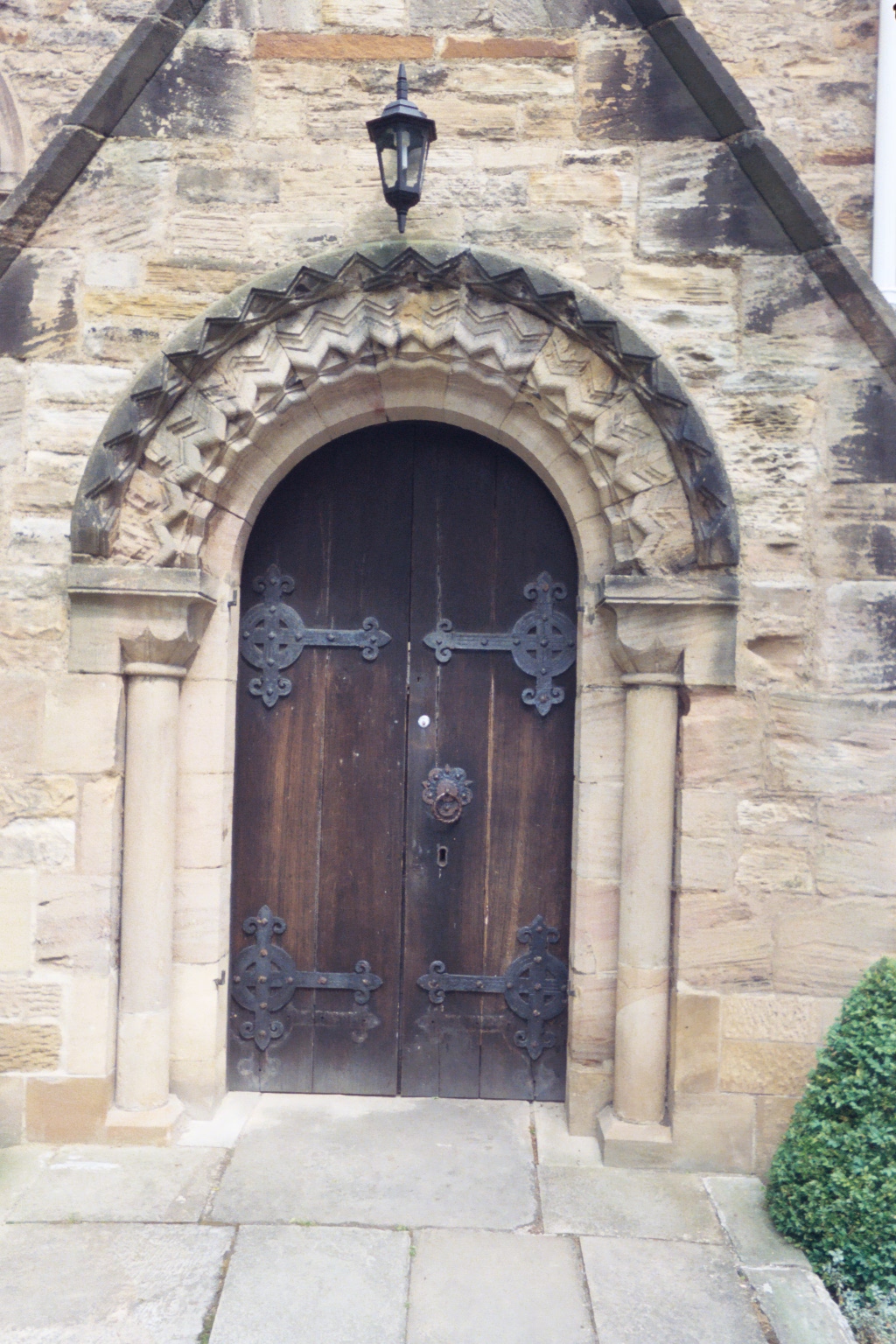
Old things can last a very long time. Take for example that door pictured above, one of the back doors into the cloister of Durham Cathedral. It’s got a Norman arch that dates back to the 11th century A.D. That’s pretty remarkable longevity. There are of course people that live a long time in this world. I had two great uncles who lived to 102. That’s remarkable by modern standards. So youth oriented is our culture that we have invented words like youth and youthful, but have you noticed there is no word oldth or oldthful? Our culture does not revere the elderly. How does one grow old gracefully in an environment that wants to turn the camera away from the elderly and their issues and lives?
I was reflecting on a remarkable passage from Ecclesiastes 12 which I will reproduce here—-
Remember your Creator
in the days of your youth,
before the days of trouble come
and the years approach when you will say,
“I find no pleasure in them”—
2
before the sun and the light
and the moon and the stars grow dark,
and the clouds return after the rain;
3
when the keepers of the house tremble,
and the strong men stoop,
when the grinders cease because they are few,
and those looking through the windows grow dim;
4
when the doors to the street are closed
and the sound of grinding fades;
when people rise up at the sound of birds,
but all their songs grow faint;
5
when people are afraid of heights
and of dangers in the streets;
when the almond tree blossoms
and the grasshopper drags itself along
and desire no longer is stirred.
Then people go to their eternal home
and mourners go about the streets.
6
Remember him—before the silver cord is severed,
and the golden bowl is broken;
before the pitcher is shattered at the spring,
and the wheel broken at the well,
7
and the dust returns to the ground it came from,
and the spirit returns to God who gave it.
What is most remarkable about this passage is that it takes the perspective of how an older person sees the world. So for example, it’s not really the sun going dark, it just appears that way to an elderly person who is losing their sight. Or in vs. 3 the ‘keepers of the house’ are of course the hands which care for one’s mortal frame, called here, the house. It then speaks of stooped posture of the elderly, and how one’s teeth, what’s left of them, don’t chew and grind like they used to do. Then the paradox is mention of how the elderly often have trouble sleeping, and the least little thing can wake them, even though strangely, they can’t hear as well as they used to do. Of course it is the elderly, when they become feeble, that become afraid of heights, and are more worried about danger in the streets outside their homes. The almond tree, with its white blooms is a symbol of the white hair of the elderly. The metaphor of the grasshopper produces a smile– the author is probably talking about the penus, which no longer gets excited any more, drags itself along, because desire has diminished or even disappeared. And when all that happens, finally one goes to one’s eternal home, and they have the funeral. In a final burst of telling metaphors the sage reminds that we must remember God before the cord of life is severed, or the golden bowl which holds our lives is shattered. The image of things cut, or broken, or shattered are all images of the ravages of time at the end of life and what happens to the body. The body becomes a mere physical object, a corpse, not a person, for the spirit has returned to God our Maker.
This all too realistic and poignant description of old age is one that believers should reflect on long and hard. For one thing, it helps us avoid the sort of mythology our culture would like to perpetuate namely that regardless of what life one has lived, everybody will go to heaven. No, says the sage, you need to remember your Maker in the days of your youth on through old age, and not forget to praise and be thankful to your Maker all the days of your life. What is assumed is an ongoing relationship with God, that causes a change in how one views the end of life.
Of course the author of Ecclesiastes is not offering us a full Christian description of how we should view old age and death, but it does provide some clues about growing old graciously. The larger context urges that: 1) we should do the good work given us by God while we have time and opportunity to do so; 2) it urges that we enjoy eating, and drinking, and fellowshipping and loving one another while we can; 3)it urges us to avoid the traps of materialism, and wasting our lives pursuing more and more wealth, which as the author says is a meaningless and empty pursuit; 4) it urges us to ‘seize the day’ to take advantage of all our opportunities in life, and not let them slip away. We are to ‘do all the good we can, in every way we can, to as many people as we can, for as long as we can’.
As I look forward someday to meeting my Maker, increasingly the one thing I hope to hear from Him is— ‘well done good and faithful servant, inherit the Kingdom’. We are to live a life, even when we are old, that leaves us without many regrets, and with a wrinkled smile on our faces.
Categories: Articole de interes general
 Barzilaiendan
Leave a comment